7 Tips for Beryllium Copper C17200 Mechanical Properties

Time:2026-10-31 Author:Sienna
0%

When a contact spring must flex repeatedly, or a connector needs to carry current without losing its shape, material data becomes practical design information. Beryllium Copper C17200 Mechanical Properties help explain why this alloy is used for demanding electrical and mechanical components. Its strength, hardness, and electrical conductivity can vary with processing and temper. That difference matters.

These seven tips focus on reading the numbers in context. They cover tensile strength, yield strength, elongation, hardness, fatigue behavior, elastic modulus, and conductivity. A datasheet value is useful, but it is not a promise for every product form or production batch. A thin strip and a machined rod may respond differently to forming, heat treatment, and testing. Small details matter.

A table can look precise while hiding the temper behind its numbers. Check the supplier’s specification, test method, and material condition before using values in calculations. Where a design is sensitive to springback, repeated loading, or electrical losses, confirm the data with the manufacturer and validate it in the actual part. That step may feel cautious. It is often cheaper than discovering a mismatch after assembly.

The guidance ahead is intended to make comparisons clearer, not replace engineering judgment or certified test reports. If two sources disagree, pause and investigate. C17200 performance depends on more than its alloy designation; manufacturing history can shape the result. Use the tips to ask better questions and choose properties that match the component’s real operating conditions.
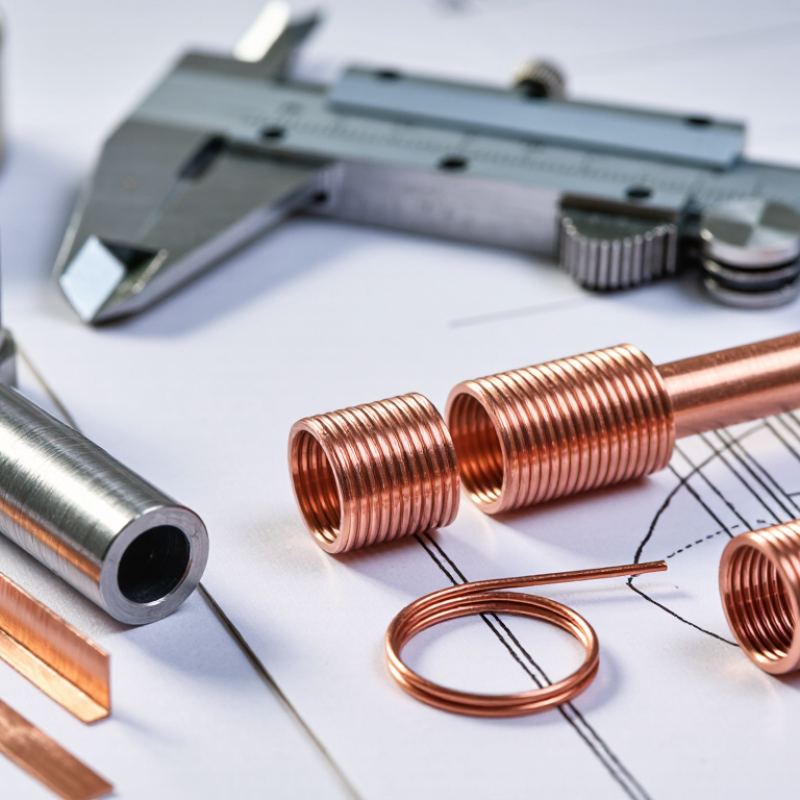
7 Tips for Beryllium Copper C17200 Mechanical Properties

Understand the Composition and Temper Designations of C17200

C17200 is a precipitation-hardening copper-beryllium alloy. Its composition typically includes about 1.8–2.0% beryllium, with copper making up most of the remainder. Small additions of cobalt or nickel help control processing and performance. This chemistry supports high strength while retaining useful electrical and thermal conductivity.

The balance matters. Even modest differences in composition or processing can affect the final properties.

Temper describes how the material was processed, not its chemical recipe. C17200 may be supplied solution-treated, age-hardened, or cold-worked and then age-hardened. Product standards may use different codes, so check the applicable specification and supplier’s data sheet before comparing values.

A strength figure without its temper is incomplete. That detail is easy to overlook.

Tips

Match the temper to the job. Check hardness and tensile data for the exact product form. Confirm whether the material is ready to use or needs aging. When two sheets disagree, pause and compare their test conditions; the difference may be real, or simply a difference in specification. A little uncertainty is useful. Don’t assume a temper label means identical properties across every form.

Review Its Strength, Hardness, Ductility, and Fatigue Resistance

C17200 beryllium copper is valued for combining high strength with useful electrical and thermal conductivity. Its mechanical properties depend strongly on temper and heat treatment. In peak-aged conditions, tensile strength can exceed 1,000 MPa, but published values vary by product form and specification. Check the material certificate before using a figure in design calculations. That trade-off matters.

Hardness rises during age hardening and may reach roughly 36–42 HRC in some high-strength tempers. This helps components resist indentation and wear, but hardness alone does not predict service life. Ductility generally falls as strength increases. A formed contact or spring may therefore need a softer temper before shaping, followed by suitable heat treatment. Small changes in forming radius can matter.

Fatigue resistance is useful in repeatedly flexed springs and electrical contacts, yet it is not a fixed material constant. Surface scratches, sharp notches, residual stress, and poor finishing can shorten fatigue life. A smooth edge helps. Test parts under representative loading when failure has serious consequences; handbook data cannot capture every production detail. One limitation is easy to overlook: the strongest condition is not automatically the best condition for every component.

Consider How Heat Treatment Changes Mechanical Performance

For C17200 beryllium copper, heat treatment can shift the balance between strength, hardness, and electrical conductivity. In the solution-treated condition, the alloy is relatively soft and workable. A rapid quench retains alloying elements in the copper matrix, preparing the material for age hardening. Aging then forms fine precipitates that impede dislocation movement, raising strength and hardness. Small details matter.

Aging temperature and time affect the result. C17200 is commonly aged near 315–330°C, but the correct cycle depends on product form, prior cold work, and the applicable material specification. Too little aging may leave strength below the target; excessive aging can reduce peak strength. Conductivity often rises as dissolved elements precipitate, though the final value depends on the full processing history. That tradeoff is real.

For a real component, do not select a cycle from a generic chart alone. Check the supplier’s condition data and verify properties with suitable testing, especially after machining or joining. A thin contact and a thick spring may respond differently because heating and cooling are not perfectly uniform. Even a controlled furnace cannot erase every variation in section size or prior work. That limitation deserves attention.

Heat treatment and mechanical performance: Solution treatment leaves C17200 relatively soft and ductile. Subsequent age hardening substantially increases tensile and yield strength, typically reducing elongation. Values shown are representative and vary with product form, processing, and specification; they are not guaranteed minimums.

Check Test Conditions and Standards When Comparing Property Data

Tip 1 Match the product form and temper before comparing C17200 values. Sheet, strip, rod, and bar can show different results, even when all carry the same alloy designation. Check the material certificate for its temper and processing condition. A value without this context is hard to use.

Tip 2 Compare like test methods. ASTM B194 covers copper-beryllium plate, sheet, and strip, while tensile testing may follow ASTM E8/E8M. For hardness, confirm the method, scale, and test location. Standards can be revised, so record the edition used. Small details matter.

Tip 3 Read the test conditions, not only the headline number. Check specimen orientation, dimensions, temperature, and whether the material was tested as supplied or after additional heat treatment. Also confirm units; mixing ksi and MPa can create a misleading comparison. If two reports disagree, investigate their methods before assuming one is wrong. I would still flag incomplete reports, even when their figures look plausible. A neat table cannot replace missing test details.

Match C17200 Properties to Design and Service Requirements

Match C17200 properties to the actual load, temperature, and electrical demands of the part. Copper Development Association data show that aged C17200 can reach tensile strengths around 1,100–1,380 MPa, depending on temper and product form. That strength suits compact springs, connectors, and fatigue-loaded contacts. But strength is not the whole story. A thin contact that must flex repeatedly may need more attention to elongation and fatigue behavior than to peak tensile strength.

Electrical conductivity is commonly reported near 22% IACS for high-strength C17200 tempers, according to Copper Development Association alloy data. That makes it useful where a connector needs both spring force and current flow, though it conducts less effectively than pure copper. Check the temperature rise at the expected current; a small contact can heat quickly. ASTM B194 covers wrought beryllium-copper plate, sheet, strip, and rolled bar, so specify the required product form and temper when reviewing material certifications.

Service conditions can change the choice. C17200 has a density near 8.25 g/cm³ and an elastic modulus around 128 GPa, useful figures for mass and deflection estimates. Still, published values are not guarantees for every finished part. Forming history, heat treatment, section thickness, and machining can shift performance. Test representative components. This step is easy to overlook. Do not select a temper from a strength table alone; compare its conductivity, spring response, and operating temperature with the real application.

FAQS

What is C17200 made of?

It is a precipitation-hardening copper-beryllium alloy. It typically contains about 1.8–2.0% beryllium, with copper forming most of the remainder. Small cobalt or nickel additions may help control processing and performance.

What does temper mean for C17200?

Temper describes processing condition, not chemical composition. The material may be solution-treated, age-hardened, or cold-worked and then age-hardened. The label alone does not guarantee identical properties across product forms.

Why should I check temper before comparing strength values?

Strength depends on temper and product form. A figure without its condition is incomplete. Check the exact specification and data sheet before comparing values.

What happens during solution treatment and quenching?

Solution treatment makes C17200 relatively soft and workable. A rapid quench retains alloying elements in the copper matrix, preparing it for age hardening. Details matter.

How does aging affect strength and hardness?

Aging forms fine precipitates that resist dislocation movement, increasing strength and hardness. C17200 is commonly aged near 315–330°C, but the suitable cycle varies with product form and prior cold work.

Can aging also change electrical conductivity?

Yes. Conductivity often rises as dissolved elements precipitate, while strength and hardness also change. The final balance depends on the full processing history. Not always predictable.

What can happen if the aging cycle is unsuitable?

Too little aging may leave strength below the target. Excessive aging can reduce peak strength. A generic chart may not fit your specific material.

Why might a thin contact and thick spring respond differently?

Heating and cooling may not be uniform through different section sizes. Prior work also matters. Even a controlled furnace cannot erase every variation, so verify properties after machining or joining. I might be overlooking a process detail.

Conclusion

Beryllium Copper C17200 Mechanical Properties depend on both the alloy’s composition and its temper, so identifying the material condition is an essential first step. Its strength, hardness, ductility, and fatigue resistance can vary with processing and heat treatment. Comparing these characteristics together gives a more useful picture than relying on a single property, especially when evaluating how the material may perform under repeated loading or demanding service conditions.

Heat treatment can significantly change mechanical performance, making it important to confirm how test specimens were prepared and which standards and conditions were used to measure reported values. Temperature, product form, and testing methods may also affect comparisons between data sources. By matching verified property data to design loads, forming needs, operating conditions, and expected service life, engineers can determine whether C17200 is suitable for a specific application.


Sienna

Sienna

Sienna is a skilled marketing professional with a deep expertise in our company’s core products and services. With a passion for innovation and detail, she plays a pivotal role in crafting insightful blog posts that not only highlight the unique features of our offerings but also provide valuable......