Why Choose C14500 Copper for Global Sourcing?

Time:2026-10-14 Author:Amelia
0%

Choosing C14500 copper for global sourcing begins with a practical question: what must the component do?

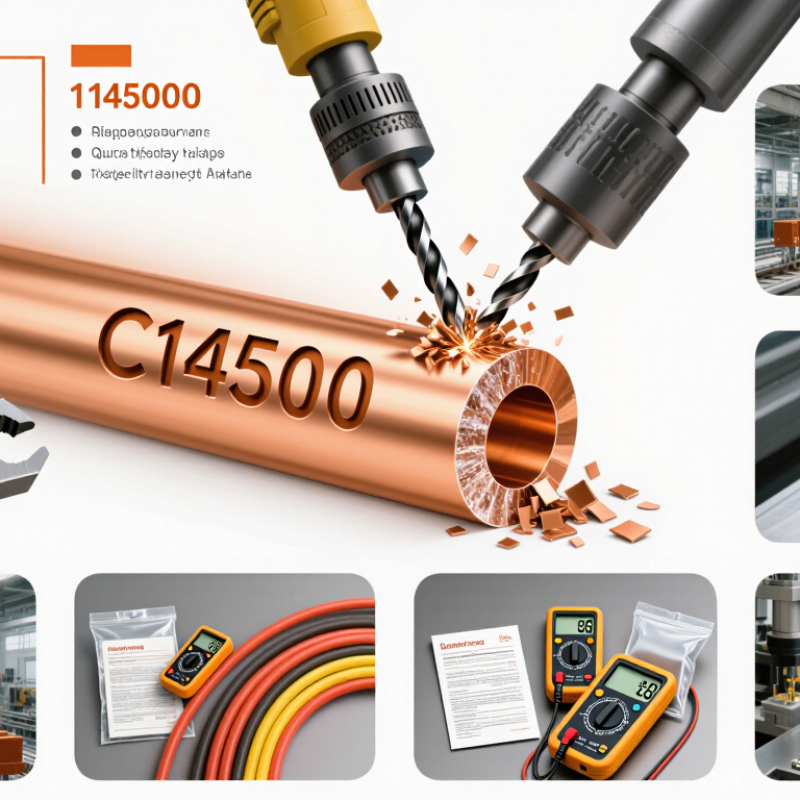
C14500, also called tellurium copper, combines strong electrical conductivity with excellent machinability. Its tellurium content helps cutting tools produce clean threads, slots, and connector surfaces. This matters when factories machine thousands of terminals, switch parts, or precision electrical components. Drill edges stay sharper. Production becomes more predictable.

Metallurgy professor Dr. John D. Verhoeven emphasized, “Material selection must begin with service conditions, not catalog labels.” That principle fits C14500 well. Buyers should compare conductivity, hardness, temper, dimensions, and required tolerances before comparing prices. A low quotation can become expensive after poor machining, rework, or delayed approval.

Global sourcing also requires traceable controls. Request the UNS C14500 designation, material certificates, heat numbers, inspection reports, and clear packaging specifications. Confirm whether the supplier follows the requested ASTM or equivalent standard. Check RoHS and REACH documentation when the destination market requires it. These records support reliable purchasing decisions.

C14500 is not automatically the best copper alloy. It may not suit every welding process, forming method, or high-strength application. That limitation deserves attention. Some suppliers also present conductivity values differently, creating avoidable confusion.

A careful buyer should test samples before placing a large order. Measure conductivity. Review machining behavior. Inspect the finished surface under real production conditions. With disciplined verification, C14500 can offer a useful balance of performance, manufacturing efficiency, and international supply confidence. The choice still depends on evidence, not enthusiasm.
Why Choose C14500 Copper for Global Sourcing?

C14500 Copper: Definition, Composition, and Core Properties

Why Choose C14500 Copper for Global Sourcing?

C14500 Copper: Definition, Composition, and Core Properties

C14500 is a free-machining copper alloy commonly known as tellurium copper. Its composition is mainly copper, with approximately 0.40–0.70% tellurium and tightly controlled residual elements. This small tellurium addition changes how the metal behaves during machining. Chips break more easily, cutting edges experience less friction, and drilled holes can show cleaner surfaces. The copper base still provides useful electrical and thermal conductivity. In typical conditions, conductivity is around 90% IACS, though the exact value depends on temper, processing, and test method.

It has practical strength, good dimensional stability, and reliable performance in electrical components, connectors, terminals, and precision-machined parts. It also resists ordinary atmospheric corrosion reasonably well. However, C14500 is not a universal replacement for pure copper or stronger copper alloys. That distinction matters.

Buyers should confirm the required temper, diameter, surface condition, and applicable material standard before placing an international order. Tensile strength and conductivity may vary significantly between annealed and harder tempers. A certificate of analysis should verify copper content, tellurium range, mechanical results, and conductivity. In my experience, sourcing errors often begin with a vague grade description. “Tellurium copper” alone is not enough. The application, inspection method, and delivery condition must be written clearly.

Why C14500 Copper Performs Well in Electrical Applications

Why Choose C14500 Copper for Global Sourcing?

C14500 copper, commonly known as tellurium copper, performs well in electrical applications because it balances conductivity and machinability. It carries current efficiently while allowing clean drilling, turning, and threading. This matters when producing terminals, connectors, switchgear parts, and electrode holders with tight dimensions. Its conductivity is often reported near 90% IACS, but the actual value depends on temper, processing, and applicable standards. Thermal conductivity also helps move heat away from contact areas.

In practical component reviews, engineers often notice fewer machining problems than with softer, highly conductive copper grades. C14500 can reduce burr formation and support consistent contact geometry. However, it is not a universal solution. A slightly lower conductivity may matter in high-current designs. Surface finish, corrosion exposure, joint pressure, and operating temperature still require verification. A reliable sourcing decision should include mill certificates, dimensional inspection, conductivity testing, and traceable batch records. Datasheets alone can be incomplete.

Tips: Confirm the temper before ordering. Ask for test results, not only nominal values. Check whether the selected grade matches the required standard. Review the full electrical path, including plating and fasteners. Small contact losses can become meaningful after repeated heating cycles.

Key Advantages of C14500 Copper for Global Sourcing

When sourcing copper components across borders, material consistency matters as much as price. C14500 copper, also called tellurium copper, offers a practical balance of conductivity and machinability. Its tellurium content helps cutting tools produce cleaner threads, holes, and contact surfaces. That detail can reduce secondary finishing during high-volume production. It also supports stable processing on automatic lathes. In real sourcing work, fewer tool changes can simplify scheduling.

C14500 retains strong electrical and thermal performance for terminals, connectors, switches, and heat-transfer parts. Exact conductivity depends on temper, dimensions, and processing history. Ask for the material grade, temper, test method, and certificate before comparing quotations.

Reliable suppliers should provide heat numbers and traceable inspection records. These documents help purchasing teams investigate variation between shipments. They also support customs and quality reviews. Small details matter.

For global sourcing, C14500 can be attractive when buyers need repeatable machining across multiple production sites. Its dimensional behavior is generally predictable when tooling and process controls are consistent. Yet it is not a universal answer. Higher conductivity grades may suit some electrical designs better.

Corrosion exposure, joining methods, and local standards also require review. In practical sourcing reviews, low-cost orders can become expensive after unclear tolerances cause rework.

A better request lists chemistry limits, hardness, surface condition, packaging, and sampling rules. Leave room for correction. Material data can look complete while one missing test changes the decision.

How to Evaluate C14500 Copper Suppliers and Product Quality

Why Choose C14500 Copper for Global Sourcing?

When sourcing C14500 copper globally, supplier evaluation should start with evidence, not attractive photographs. C14500 is a tellurium copper alloy known for good electrical conductivity and excellent machinability. These properties support terminals, connectors, welding electrodes, and precision machined parts.

Ask for recent mill certificates and verify the alloy designation, chemical composition, and production heat number. The documents should identify conductivity, hardness, tensile strength, and dimensional tolerances. Confirm that these values match your drawing and application requirements. Clear lot traceability matters when several shipments arrive months apart. It also helps resolve quality disputes without guesswork.

Samples are useful, but they can mislead. One polished bar proves little. Request samples from the same production route used for regular orders. Check surface marks, straightness, burrs, and actual dimensions with calibrated tools. An independent laboratory can verify chemistry and conductivity when the application is sensitive. During supplier reviews, examine inspection records, corrective actions, packaging methods, and response times. A low price may hide unstable tolerances or weak documentation. A perfect sample can still conceal production variation. I would also question suppliers that promise every result without discussing limitations, testing frequency, or rejected material. That hesitation is often more credible than overconfident sales language.

Important Standards, Costs, and Logistics in International Procurement

Why Choose C14500 Copper for Global Sourcing?

Important Standards, Costs, and Logistics in International Procurement

C14500 copper, also called tellurium copper, supports efficient machining and reliable electrical conductivity. Its tellurium content improves cutting performance without seriously reducing conductivity. This balance suits terminals, connectors, precision parts, and components requiring repeated machining. Buyers should request the UNS designation, chemical composition, temper, dimensions, and applicable product standard. ASTM or equivalent national standards may apply, depending on the product form. Do not accept a general “copper alloy” description. It is too vague.

Cost comparisons need more than a price per kilogram. Copper market movement affects the base price. Tellurium availability can add a variable alloy premium. Machining yield, surface requirements, testing, packaging, customs duties, and payment terms also change the final cost. A low unit price can mislead. Ask for a transparent quotation with the pricing date and adjustment method. Review mill certificates and independent test reports when the application is critical. Small paperwork gaps can become expensive.

Logistics deserve equal attention. Confirm bar length, coil form, bundle weight, labeling, moisture protection, and pallet strength before shipment. C14500 can arrive with dents or oxidation if packaging is poorly specified. Use clear Incoterms and confirm who manages export documents, insurance, and import clearance. Check the correct tariff classification with a qualified customs professional. Lead times may extend during alloy shortages or inspection delays. Build a modest buffer. It may feel inefficient, but emergency freight costs more. Specifications sometimes change after sampling, so record every revision and approve a final drawing before production.

Why Choose C14500 Copper for Global Sourcing? - Important Standards, Costs, and Logistics in International Procurement

Data Dimension C14500 Copper Data Procurement Relevance Verification or Planning Note
Material identification UNS C14500; tellurium-bearing free-machining copper Suitable for precision-machined electrical and industrial components Confirm the UNS designation on the mill test certificate and purchase order.
Typical chemical composition Copper: balance, typically 99.0% minimum; tellurium: approximately 0.40–0.70% Tellurium improves chip formation and machining performance without using lead as the primary free-machining additive. Exact limits depend on the applicable product standard and supplied temper.
Electrical conductivity Common minimum reference value: about 90% IACS at 20°C Provides a practical balance between machinability and electrical performance. Request conductivity results when the component has a defined electrical-resistance requirement.
Density Approximately 8.94 g/cm³ at room temperature Useful for converting part volume into shipment weight and estimating freight cost. Actual shipping weight must include bars, coils, crates, pallets, and protective packaging.
Machinability Generally rated as excellent among copper alloys Can reduce tool loading and improve chip control in turning, milling, and automatic screw-machine work. Cutting results depend on tool geometry, coolant, feed rate, speed, and material temper.
Corrosion resistance Good resistance in many ordinary atmospheric and industrial environments Supports use in fittings, terminals, connectors, and machined hardware. Validate performance for seawater, ammonia, strong acids, or other aggressive media.
Relevant material standards UNS C14500; ASTM product requirements may apply to free-cutting copper rod and bar; European designation commonly associated with CuTe0.5 is CW118C A defined standard reduces ambiguity between suppliers and export markets. Specify product form, dimensions, tolerance, temper, inspection, and governing standard together.
Common product forms Round bar, rod, wire, rectangular bar, cut blanks, and machined preforms Form selection affects yield, machining time, minimum order quantity, and freight efficiency. For international sourcing, confirm straightness, coil or bar length, end condition, and surface finish.
Indicative material budget Approximately USD 12–25 per kg for standard industrial quantities, excluding taxes and freight Provides an early-stage budgeting range rather than a firm market quotation. Pricing varies with copper exchange value, shape, diameter, temper, quantity, conversion charge, and destination.
Cost drivers Copper content, tellurium addition, processing route, tolerance, inspection, packaging, and order volume A lower purchase price can be offset by poor yield, excess machining allowance, or higher freight weight. Compare total landed cost rather than material price alone.
Minimum order and lead time Typical planning assumption: 100–500 kg minimum for standard sizes; approximately 4–10 weeks for production before transit Stock sizes may ship faster, while non-standard sizes and tight tolerances usually require production. Treat these figures as planning ranges and obtain written confirmation before placing an order.
Packaging for export Dry, protected bundles or crates; corrosion-resistant wrapping and edge protection recommended Reduces oxidation, scratching, moisture exposure, and handling damage during multimodal transport. Specify bundle weight, lifting points, moisture barrier, pallet treatment, and shipping marks.
Key export documents Commercial invoice, packing list, transport document, certificate of origin when required, and material test certificate Complete documentation supports customs clearance and incoming quality inspection. Document requirements depend on origin, destination, customs classification, and contract terms.
Incoterm selection Common choices include FCA, FOB, CPT, and DAP, depending on transport mode and risk allocation Clearly assigns freight, insurance, export clearance, import clearance, and delivery responsibilities. State the named place or port and the applicable Incoterms rule and year in the contract.
Quality-control documents Mill test certificate, chemical analysis, mechanical results where specified, dimensional report, and visual inspection record Provides traceability from heat or lot number to the delivered material. Require lot identification on bundles and ensure certificate values match the purchase specification.
Best-fit applications Electrical terminals, connector components, valve parts, threaded fittings, precision-machined hardware, and heat-exchange components Best suited where machinability and moderate-to-high conductivity are both important. For high-strength, high-temperature, or severe corrosion applications, compare alternative copper alloys before final approval.

Note: Cost, lead-time, freight, and minimum-order figures are indicative planning ranges. Final values should be confirmed against the current copper market, product specification, destination regulations, and written supplier quotation.

FAQS

What is C14500 copper commonly used for?

C14500 copper suits terminals, connectors, switchgear parts, electrode holders, and precision-machined components. It carries current efficiently. Its machinability supports clean holes, threads, and contact surfaces.

Why is C14500 copper suitable for machining?

Its composition helps cutting tools produce fewer burrs and cleaner features. This can reduce secondary finishing and tool changes. Results still depend on tooling and process control.

How conductive is C14500 copper?

Conductivity is often reported near 90% IACS. The actual value depends on temper, processing, dimensions, and test methods. Do not rely on nominal figures alone.

Can C14500 copper manage heat?

Its thermal conductivity helps move heat away from electrical contact areas. This may reduce localized heating during operation. Joint pressure and surface condition still need checking.

What documents should buyers request from suppliers?

Request mill certificates, heat numbers, test results, dimensional records, and batch traceability. Check chemistry, hardness, tensile strength, conductivity, and tolerances. Paperwork matters.

How can buyers inspect C14500 copper samples?

Measure dimensions with calibrated tools. Check straightness, surface marks, burrs, and contact areas. Samples should follow the same production route as regular orders.

Is C14500 copper suitable for every electrical design?

No. A higher-conductivity grade may perform better in high-current applications. Review the complete electrical path, including plating, fasteners, joints, and contact pressure.

What sourcing problems can occur with C14500 copper?

Low prices may hide unstable tolerances, incomplete testing, or weak packaging. Rework can erase the original savings. One polished sample proves little.

How should buyers compare different C14500 copper quotations?

Compare grade, temper, chemistry limits, test methods, surface condition, tolerances, packaging, and sampling rules. Confirm the applicable standard. A missing test can change the decision.

What should make a supplier’s claims seem questionable?

Be cautious when every result sounds perfect without testing limits or rejection data. Honest suppliers should discuss variation and correction procedures. That hesitation may be more credible.

Conclusion

C14500 copper, commonly known as tellurium copper, combines high electrical and thermal conductivity with improved machinability. Its tellurium content helps copper cut cleanly and reduces machining friction, while maintaining strong performance in conductive components such as terminals, connectors, busbars, switches, and precision electrical parts. This balance makes C14500 a practical material for applications that require both reliable current flow and efficient manufacturing.

For global sourcing, buyers should evaluate suppliers through chemical composition reports, dimensional inspection, mechanical and electrical test data, traceability systems, and compliance with relevant international standards. Product form, temper, surface condition, packaging, minimum order quantities, lead times, shipping methods, duties, and currency changes should also be considered when comparing total costs. A dependable sourcing process should confirm material quality before shipment, define inspection requirements clearly, and ensure that packaging protects C14500 products from moisture, contamination, and physical damage during international transportation.


Amelia

Amelia

Amelia is a seasoned marketing professional with a wealth of expertise in our company’s core offerings. With an unwavering passion for driving growth and innovation, she plays a pivotal role in shaping our marketing strategies and enhancing brand visibility. A key aspect of her responsibilities......