C17200 Beryllium Copper is a high-performance copper alloy used where strength, conductivity, and dimensional stability must work together. It is not pure copper. Small additions of beryllium allow the alloy to achieve exceptional hardness after controlled heat treatment. Engineers commonly specify it for electrical contacts, precision springs, molds, aerospace components, and industrial tooling.
Understanding C17200 Beryllium Copper Properties requires more than reading a single strength value. Temper, aging condition, product form, and manufacturing history can significantly change performance. In practice, an age-hardened strip may behave differently from a solution-treated bar. Details matter. This article will examine its mechanical strength, electrical and thermal conductivity, corrosion resistance, fatigue behavior, machinability, and typical applications.
Reliable material selection depends on verified data. Experienced engineers compare supplier certificates, applicable ASTM or UNS specifications, and actual service conditions before approving the alloy. Surface finish and contact pressure also deserve attention, especially in electrical assemblies. These factors are sometimes overlooked.
C17200 can provide an impressive balance, but it is not ideal for every design. Its cost, heat-treatment requirements, and processing precautions may influence the final choice. Manufacturing operations should control airborne particles and follow appropriate occupational safety procedures. That point is easy to underestimate. The following discussion connects laboratory properties with practical decisions, while acknowledging that published values can vary between standards, producers, and tempers.
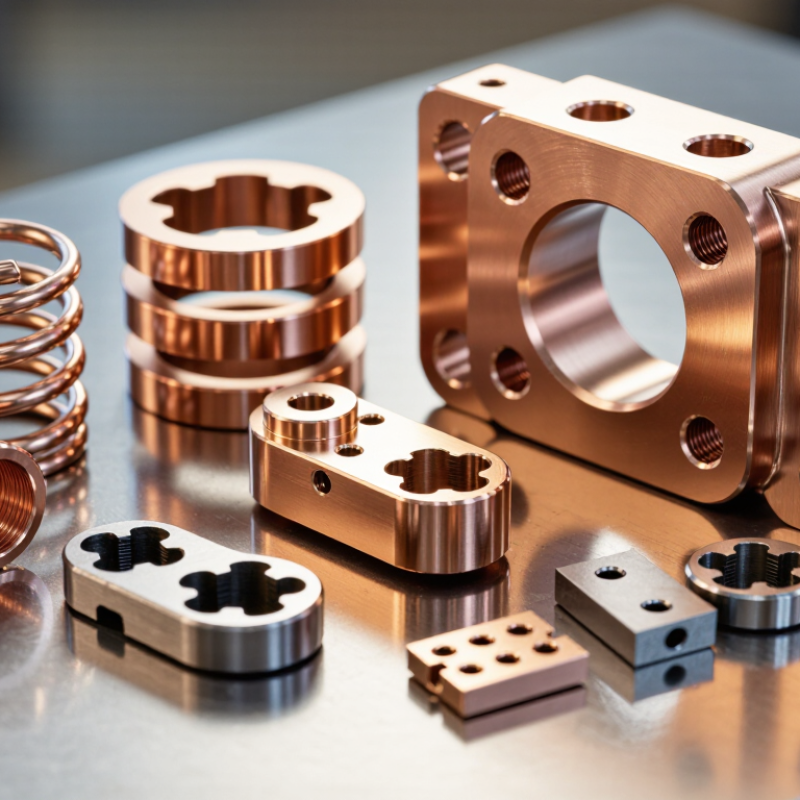
C17200 is a precipitation-hardening copper alloy containing about 1.80–2.00% beryllium, with copper forming the balance. Small amounts of cobalt, nickel, and iron may also be present. ASTM B194/B194M identifies this grade for high-strength plate, sheet, strip, and bar applications. Unlike ordinary copper, C17200 gains much of its strength through controlled aging after solution treatment. That process changes its performance significantly.
Its tensile strength can reach roughly 1,100–1,400 MPa in aged conditions, according to technical data aligned with ASTM requirements. Electrical conductivity commonly ranges from about 22% to 60% IACS, depending on temper and heat treatment. This balance makes C17200 useful for electrical contacts, precision springs, connectors, and components exposed to repeated loading. In production practice, the alloy often feels easy to form before aging, then becomes noticeably harder and less forgiving afterward.
Heat treatment requires discipline. A small furnace variation can alter hardness, conductivity, and dimensional stability. A common mistake is treating every C17200 product as having identical properties. It does not. The Copper Development Association and ASTM data show that thickness, temper, and aging condition affect final results. Designers should verify the mill certificate and test the actual batch. The published range is helpful, but it is not a promise.
C17200 beryllium copper is a copper-based alloy containing about 1.8–2.0% beryllium. Copper forms the main balance, while small amounts of nickel, cobalt, iron, and other elements may appear within specification limits. These additions support strength and processing control. Exact limits can vary by standard and product form.
Its classification is more specific than simply “copper alloy.” C17200 belongs to the high-strength copper-beryllium family and is generally treated as a wrought, precipitation-hardening alloy. Manufacturers first solution-treat the material, then age it to form fine beryllium-rich particles inside the copper matrix. This controlled structure improves hardness, tensile strength, fatigue resistance, and spring performance.
Heat treatment changes the classification in practical use. A solution-treated condition is softer and easier to form. An age-hardened condition offers much higher strength but reduced ductility. That trade-off matters. I would not judge C17200 from chemistry alone. Temper, section size, testing method, and processing history can change the result. Conductivity also varies with condition. Small composition differences may seem unimportant, yet they can affect machining, forming, and final performance. Always confirm the material certificate and relevant specification before selecting it for a demanding component.
| Category | Dimension | Typical Information |
|---|---|---|
| Identification | UNS designation | C17200 |
| Classification | Alloy family and strengthening method | Wrought copper–beryllium alloy; precipitation (age) hardenable. Strength develops through solution treatment followed by aging. |
| Composition | Beryllium (Be) | 1.8–2.0% by weight |
| Composition | Cobalt plus nickel (Co + Ni) | 0.2% minimum by weight |
| Composition | Cobalt, nickel, and iron (Co + Ni + Fe) | 0.6% maximum by weight |
| Composition | Copper (Cu) | Balance of the alloy |
| Mechanical properties | Strength and hardness | Can reach high strength and hardness after aging. Actual values depend on product form, dimensions, heat treatment, and specified temper. |
| Mechanical properties | Elastic modulus | Approximately 130 GPa (19 million psi); typical reference value, subject to product specifications. |
| Physical properties | Density | Approximately 8.25 g/cm³ (0.298 lb/in³) |
| Electrical properties | Electrical conductivity | Conductivity varies with temper and heat treatment; aged material typically has higher conductivity than solution-treated material. |
| Performance | Common characteristics | Combines high strength with useful electrical and thermal conductivity, good fatigue performance, and resistance to wear and galling. |
| Applications | Typical uses | Electrical contacts, springs, connectors, precision components, and non-sparking tools where its combination of strength and conductivity is suitable. |
| Handling and safety | Processing precautions | Beryllium-containing dust and fumes can pose serious health hazards. Use appropriate controls and follow applicable occupational-safety requirements during machining, grinding, and heating. |
Composition limits are typical published ranges for C17200; mechanical and conductivity values vary by product form, temper, and applicable specification. Consult the material certificate and governing standard for design-critical values.
C17200 beryllium copper is a precipitation-hardened alloy valued for its unusual combination of strength, conductivity, and dimensional stability. In the hardened condition, its tensile strength commonly reaches 1,100–1,400 MPa, while hardness may approach 36–43 HRC. These values depend strongly on heat treatment and product thickness. A single datasheet can mislead.
Its density is approximately 8.25 g/cm³, with an elastic modulus near 128 GPa. Electrical conductivity often ranges from 22% to 28% IACS, and thermal conductivity may reach about 105–125 W/m·K. The alloy remains nonmagnetic in normal service and offers good resistance to wear, fatigue, and corrosion. It also keeps useful spring properties after repeated loading. That matters.
C17200 softens at elevated temperatures, so operating temperature deserves careful review. Its melting range is roughly 866–982°C, but this does not define a safe working temperature. In practical machining, hardened material can generate heat quickly and wear cutting tools. The alloy’s performance also changes with temper, section size, surface condition, and testing method. I have found that ignoring these details creates unrealistic design expectations. Mechanical strength may be impressive, yet conductivity can fall after certain aging treatments. Engineers should verify certified test data before selecting dimensions, tolerances, or heat-treatment conditions.
C17200 is a precipitation-hardened copper-beryllium alloy known for high strength, good electrical conductivity, wear resistance, and non-sparking performance. The chart shows representative mechanical properties for an age-hardened condition; actual values vary with temper and product form.
C17200 combines substantially higher strength than pure copper with useful electrical and thermal conductivity, making it suitable for electrical contacts, springs, connectors, and components requiring strength and wear resistance.
C17200 beryllium copper is strengthened mainly through precipitation hardening. Its copper matrix receives a controlled amount of beryllium, then develops fine strengthening particles during aging. These particles restrict dislocation movement and produce high strength, hardness, fatigue resistance, and electrical conductivity.
The usual route begins with solution annealing at approximately 760–800°C, followed by rapid cooling. This treatment keeps beryllium dissolved in the copper matrix. Aging then occurs near 315–345°C for a controlled period. The exact temperature and time depend on section thickness, required hardness, and the previous cold work. Too little aging leaves the alloy soft. Excessive aging can reduce strength. That mistake is easy to miss.
Cold working may be performed before aging to increase strength further. However, heavy deformation can affect dimensional stability and complicate machining. Shops commonly use carbide tools, sharp edges, stable clamping, and generous chip clearance. Electrical discharge machining can help with complex shapes, but the surface may need cleaning afterward. Heat treatment should be verified with calibrated equipment, not assumed from furnace settings.
Tips: Keep a clear record of solution treatment, cooling speed, aging time, and hardness results. Test representative samples from the same production batch. When machining, avoid overheating thin sections. C17200 can look stable while internal stresses remain. A small trial run is often wiser than immediate full-scale production.
C17200 beryllium copper is widely used when components need strength, conductivity, and reliable spring action. Its properties come from a controlled beryllium addition and heat treatment. The alloy can reach high hardness while retaining useful electrical performance. It also resists corrosion and remains nonmagnetic in many operating conditions.
Electrical connectors, sockets, and relay parts commonly use C17200. Its spring fingers maintain contact pressure after repeated mating cycles. Small contacts can carry current while resisting wear from vibration. Switch components benefit from its consistent elasticity and low risk of permanent deformation. In practical designs, engineers often specify it for clips, terminals, and precision contact springs.
The alloy also appears in aerospace instruments, medical equipment, and industrial control systems. Machined parts may include bushings, shafts, and wear-resistant guides. Molds and tooling sometimes use it where fast heat transfer matters. Welding electrodes can also rely on its strength and resistance to deformation. However, C17200 is not automatically the best choice for every connector. Its conductivity is lower than pure copper, and heat treatment can complicate production control. That detail is easy to overlook. Engineers should compare current load, hardness, machining needs, and service temperature before selecting it. A cheaper copper alloy may work better in a low-stress application, while C17200 earns its cost in demanding, repeated-use components.
It contains about 1.8–2.0% beryllium, with copper making up most of the alloy. Small amounts of other elements may be present.
It is a high-strength, wrought copper alloy that hardens through precipitation heat treatment. The condition matters.
Solution-treated material is softer and easier to form. Aging increases strength and hardness but reduces ductility. A real trade-off.
It is used in electrical contacts, relay parts, clips, terminals, and precision springs. Tiny spring fingers are one example.
It can maintain contact pressure through repeated use and resist wear from vibration. Its conductivity is lower than pure copper.
No. Compare current load, hardness, service temperature, and manufacturing needs. I might overlook conductivity if I focused only on strength.
It can be used for bushings, shafts, wear-resistant guides, molds, tooling, and welding electrodes. Heat transfer can matter in tooling.
Check the material certificate, specification, temper, and product form. Section size and processing history can also affect performance. Details count.
C17200 Beryllium Copper is a high-performance copper alloy containing a small amount of beryllium, typically classified as a precipitation-hardening copper alloy. Its combination of copper’s conductivity and beryllium’s strengthening effect gives it an excellent balance of strength, hardness, elasticity, wear resistance, corrosion resistance, and dimensional stability. These C17200 Beryllium Copper Properties make the alloy suitable for demanding applications where reliable mechanical performance and electrical contact capability are required.
The alloy is commonly strengthened through solution treatment, rapid cooling, cold working, and age hardening. By controlling these processing steps, manufacturers can adjust its hardness, tensile strength, spring performance, and conductivity for different service conditions. C17200 is widely used for precision springs, electrical connectors, contact components, switches, relays, tooling, and parts requiring non-sparking performance and resistance to repeated loading. Proper heat treatment and machining practices are important for achieving consistent quality and preserving the alloy’s intended properties.

Kepai