China’s aluminium processing sector has become an important sourcing base for Aluminium Bronze Plate. Its advantages include broad alloy capacity, integrated casting facilities, and export experience. However, supplier quality can differ sharply between factories.
The USGS Mineral Commodity Summaries 2025 reported global copper mine production at approximately 23 million metric tons in 2024. This scale highlights the importance of stable copper supply for bronze manufacturers. The International Copper Study Group also continues to monitor refined copper demand, mine output, and market risks. These reports do not rank plate suppliers directly. They provide useful industry context.
This guide examines ten Chinese suppliers through practical criteria. These include alloy grades, plate thickness, casting methods, heat treatment, testing systems, and export documentation. ASTM B150/B150M and related customer specifications can help verify copper-alloy plate requirements. EN and GB standards may also apply, depending on the destination market.
Details matter.
A reliable factory should provide mill certificates, chemical analysis, mechanical results, and traceable batch numbers. A clean warehouse, marked plate edges, and protected surfaces can reveal production discipline. Yet visual inspection alone is insufficient. Laboratory verification remains necessary for critical applications.
The ranking is an informed market comparison, not a government certification. Some suppliers publish limited production data, which makes direct comparison imperfect. Buyers should confirm current capacity, lead times, tolerances, and independent test requirements before placing orders. This review aims to identify credible candidates while recognizing that supplier performance can change over time.
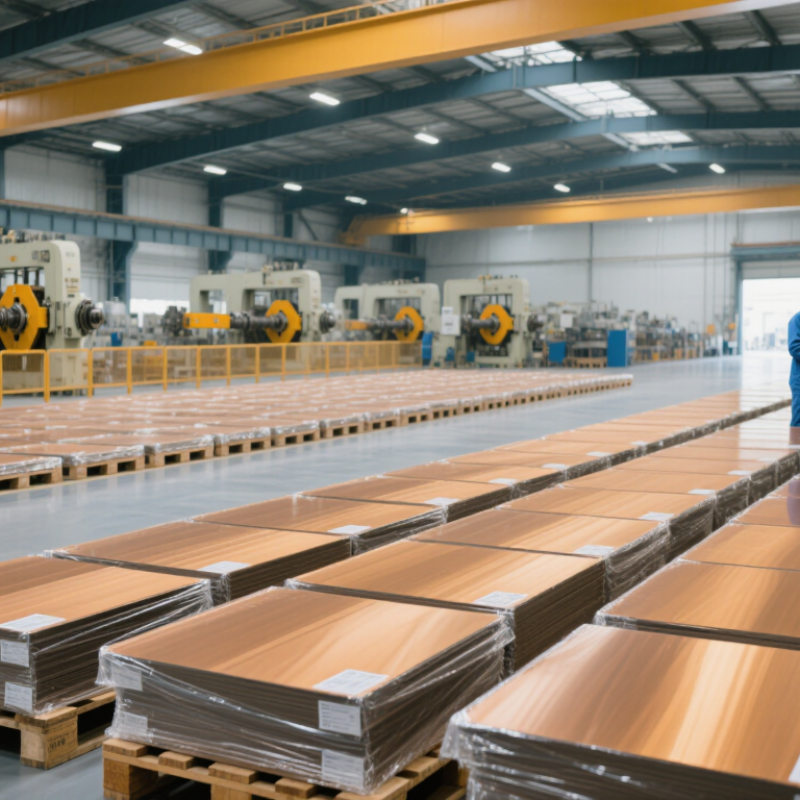
Aluminium bronze plate is a copper-based alloy containing aluminum, usually with iron, nickel, or manganese additions. It is not aluminum sheet. That distinction matters. The copper-rich structure gives the plate useful strength, wear resistance, and dependable performance near seawater. A machined plate may show a warm golden-brown surface, while heat treatment can change its hardness and grain structure. Exact properties depend on composition, thickness, and processing history.
In practical work, engineers use aluminium bronze plate for valve parts, marine fittings, pump components, bushings, and sliding wear surfaces. It resists many forms of corrosion, especially in marine environments, but it is not immune. Stagnant water, chemicals, poor cleaning, or unsuitable mating metals can still cause damage. Cutting also needs care. The alloy can work-harden, producing heat and uneven edges when tools are dull. I have found that a clean drawing, realistic tolerances, and verified test data prevent more problems than attractive catalogue claims.
When comparing suppliers, ask for the alloy designation, thickness tolerance, mechanical test reports, surface condition, and traceability documents. Confirm whether the plate is rolled, forged, or heat-treated. These details influence forming, welding, machining, and service life. “Top” should not mean cheapest or most famous. A supplier may offer excellent chemistry but inconsistent flatness. Another may provide smooth plates but weak documentation. The decision deserves a second look before cutting material.
Evaluating China’s top aluminium bronze plate suppliers requires more than comparing prices. Start with chemistry control. Request heat-level test reports showing aluminium, iron, nickel, manganese, copper, and impurity levels. The results should match ASTM B150/B150M or the agreed EN specification. A reliable supplier also provides furnace numbers, batch codes, and original inspection records. Traceability matters.
Mechanical performance needs equal attention. Ask for tensile strength, yield strength, elongation, hardness, and ultrasonic testing results. Plate thickness should be checked at several points, not only at the edge. The International Aluminium Institute reports that recycled aluminium uses about 5% of the energy required for primary aluminium production. However, aluminium bronze is copper-rich, so this figure cannot be transferred directly. That limitation deserves attention. Suppliers should disclose scrap content, melting routes, and energy data instead of making broad environmental claims.
Production capability is another practical test. Review equipment capacity, rolling tolerances, heat-treatment control, and corrective-action records. ISO 9001 certification supports process discipline, but it does not prove alloy quality by itself. The ISO Survey 2023 recorded more than 1.26 million ISO 9001 certificates worldwide, showing how common certification has become. It is only a starting point. Buyers can compare export history through UN Comtrade, then audit a recent production lot independently. Small samples can mislead. Factory visits, third-party testing, and sealed reference samples provide stronger evidence.
China’s Top 10 Aluminium Bronze Plate Suppliers should be judged by capability, not advertising language. A reliable supplier should provide clear grade options, including common aluminium bronze families for marine, pump, valve, and heavy-duty engineering applications. Buyers should check chemical composition, tensile strength, hardness, plate thickness, flatness, and surface condition. Each batch should include traceable inspection records.
Factory experience matters. A capable producer can explain melting control, casting methods, rolling practice, heat treatment, and final machining. It should also support custom sizes without hiding tolerance limits. Ask for recent test reports from qualified laboratories. Confirm whether the reports match the supplied heat number. Small details matter.
Request samples first.
Supplier audits should examine equipment, storage conditions, packaging, and corrective-action records. Export experience is useful, but it does not replace technical evidence. A polished website proves little. Some suppliers perform well on standard plates but struggle with thin gauges or tight flatness requirements. That weakness is easy to miss. Lead time, minimum order quantity, corrosion testing, and replacement procedures also deserve written confirmation. Standards such as ASTM, EN, or GB may apply, depending on the project. However, selecting the correct standard requires engineering review. A ranking of China’s top ten suppliers should remain flexible, because the best choice changes with alloy grade, dimensions, delivery schedule, and inspection expectations.
China’s leading aluminium bronze plate suppliers usually offer more than standard flat stock. Their product ranges may include hot-rolled plate, cold-finished sheet, cut-to-size blanks, and machined components. Common grades include C63000, C61900, C62400, C95400, and C95800. Each grade differs in strength, hardness, corrosion resistance, and weldability. C63000 suits demanding structural and marine parts. C95400 is often selected for heavy-duty wear applications. Grade choice should follow the working load, seawater exposure, temperature, and joining method.
Manufacturing capability separates a dependable supplier from a simple trading company. Strong producers control melting, casting, rolling, heat treatment, surface finishing, and dimensional inspection. Many can provide ultrasonic testing, hardness checks, tensile reports, and chemical analysis for each batch. Some also support CNC cutting, drilling, and machining, reducing workshop waste. Ask for material certificates and traceability records. They matter when plate enters pressure, marine, or industrial equipment. Not every supplier controls every stage. That assumption can fail.
Experienced buyers should review thickness tolerance, flatness, minimum order quantity, and delivery consistency. Samples reveal surface pores, edge cracks, and uneven coloring. A polished surface alone proves little. Factory audits, process photographs, and independent inspection add confidence. Suppliers may also produce custom widths and heat-treated conditions. However, faster customization can increase cost and lead time. Clear drawings prevent avoidable rework. The best choice balances grade accuracy, process control, inspection evidence, and practical communication.
Key aluminium bronze grades commonly available for industrial plate, fabricated components, and wear-resistant applications. The chart shows representative alloying levels based on published ASTM copper-alloy grade ranges; copper remains the balance.
C95400 is widely selected for general wear and corrosion resistance, while nickel-aluminium bronze grades such as C95500, C95800, and C95900 provide improved strength, seawater resistance, and durability. Typical manufacturing capabilities include casting, hot rolling, solution treatment, annealing, CNC machining, dimensional inspection, and ultrasonic testing.
Choosing a Chinese aluminium bronze plate supplier requires more than comparing prices. Start by defining the alloy grade, plate thickness, width, length, hardness, and expected application. Request a recent mill test certificate showing chemical composition, tensile strength, elongation, and hardness. The certificate should match the actual production batch, not a generic template.
Ask how the supplier controls casting, rolling, heat treatment, and surface finishing. A reliable factory can explain its inspection points clearly. Request sample plates before placing a large order. Check the surface under bright light, measure thickness at several positions, and inspect edges for cracks or excessive burrs. Small variations matter. I would also ask for production photos, equipment details, and an independent factory audit when the order is substantial.
Communication reveals practical reliability. Test whether the sales team answers technical questions directly or avoids them. Confirm minimum order quantity, lead time, packaging, labeling, payment terms, and export documents in writing. Wooden crates should protect corners and prevent moisture exposure during transport. Do not choose the cheapest quotation automatically. A low price may exclude testing, proper packing, or realistic delivery time. One weakness in this approach is that even careful documents cannot reveal every production problem. Keep a retained sample, use pre-shipment inspection, and include measurable acceptance criteria in the contract. Verify everything twice.
The following comparison uses anonymized supplier profiles. Capacity, dimensions, lead times, certifications, and commercial terms are indicative ranges commonly used for Chinese aluminium bronze plate sourcing and should be confirmed through technical drawings, mill certificates, samples, and a formal quotation.
| Rank | Anonymized Supplier Profile | Typical Aluminium Bronze Grades | Applicable Standards | Typical Thickness Range | Typical Plate Width | Manufacturing Capability | Monthly Capacity | Quality Documentation | Typical Lead Time | MOQ for Export Orders | Best Fit | Selection Score |
|---|---|---|---|---|---|---|---|---|---|---|---|---|
| 1 | Profile A — integrated melting, rolling, heat-treatment, and testing | C61400, C63000, C63200 | ASTM B171, ASTM B152, EN 1653, GB/T 4423 | 3–120 mm | Up to 2,500 mm | Hot rolling, cold rolling, solution treatment, stress relieving, sawing | 350–600 tonnes | EN 10204 3.1 certificate, chemical analysis, tensile test, hardness test, ultrasonic testing | 25–40 days | 500 kg | Marine, shipbuilding, heavy industrial components | 9.4/10 |
| 2 | Profile B — high-volume copper-alloy plate producer | C61400, C61900, C63000 | ASTM B171, ASTM B888, EN 1653, JIS H3100 | 4–100 mm | Up to 2,000 mm | Continuous casting, hot rolling, annealing, precision cutting | 250–450 tonnes | Mill test certificate, dimensional report, mechanical-property report | 20–35 days | 1 tonne | Regular industrial orders and repeat production | 9.1/10 |
| 3 | Profile C — export-focused manufacturer with machining support | C63000, C63200, C95400 equivalent cast plate grades | ASTM B171, ASTM B148, EN 1982, GB/T 1176 | 6–150 mm | Up to 1,800 mm | Cast plate production, heat treatment, CNC cutting, edge machining | 180–320 tonnes | 3.1 inspection certificate, third-party inspection support, ultrasonic report | 30–45 days | 800 kg | Custom blanks and machined wear-resistant parts | 8.9/10 |
| 4 | Profile D — specialist in thin and medium-gauge rolled plate | C61400, C61900, C62400 | ASTM B152, ASTM B171, EN 1653, GB/T 2059 | 1.5–50 mm | Up to 1,500 mm | Cold rolling, precision leveling, annealing, coil-to-sheet processing | 150–280 tonnes | Chemical composition, tensile strength, elongation, hardness, flatness data | 20–35 days | 300 kg | Electrical, engineering, and fabrication applications | 8.7/10 |
| 5 | Profile E — medium-sized supplier for custom dimensions | C63000, C63200, C95400 | ASTM B171, ASTM B148, EN 1982, DIN standards on request | 5–100 mm | Up to 1,600 mm | Sand casting, continuous casting, rolling, sawing, drilling | 100–220 tonnes | Material certificate, composition report, visual and dimensional inspection | 30–50 days | 500 kg | Low-volume custom projects and replacement parts | 8.5/10 |
| 6 | Profile F — supplier with strong non-destructive testing capability | C61400, C63000, C63200 | ASTM B171, EN 1653, GB/T 4423 | 8–130 mm | Up to 2,000 mm | Hot rolling, heat treatment, ultrasonic testing, surface grinding | 120–250 tonnes | Ultrasonic testing, tensile testing, hardness mapping, 3.1 certificate | 28–45 days | 1 tonne | Pressure equipment, marine structures, safety-critical parts | 8.4/10 |
| 7 | Profile G — cost-competitive regional producer | C61400, C61900, C95400 | ASTM B152, ASTM B171, EN 1653, GB/T 2059 | 3–80 mm | Up to 1,250 mm | Rolling, annealing, straightening, standard plate cutting | 80–180 tonnes | Basic mill certificate, chemical analysis, dimensional inspection | 25–45 days | 500 kg | General engineering and price-sensitive applications | 8.1/10 |
| 8 | Profile H — small-batch supplier with flexible customization | C63000, C63200, C95400 | ASTM B171, ASTM B148, EN 1982 | 6–100 mm | Up to 1,000 mm | Cast plate, heat treatment, waterjet cutting, CNC machining | 60–140 tonnes | Inspection report, composition report, sample approval service | 35–55 days | 200 kg | Prototype orders, maintenance, and special-size plates | 7.9/10 |
| 9 | Profile I — distributor-manufacturer with broad stock availability | C61400, C63000, C95400 | ASTM, EN, JIS, and GB standards subject to order | 2–100 mm | Up to 1,500 mm | Stock cutting, outsourced rolling, surface finishing, export packing | 40–120 tonnes | Original mill certificate, dimensional report, packing list | 7–25 days for stock; 30–50 days for production | 100 kg | Urgent replacement orders and mixed-size purchases | 7.7/10 |
| 10 | Profile J — project-oriented supplier for fabricated components | C63000, C63200, C95400 equivalent grades | ASTM B171, ASTM B148, EN 1982, customer specifications | 10–160 mm | Up to 1,800 mm | Casting, heat treatment, CNC machining, drilling, beveling, assembly support | 50–130 tonnes | Inspection plan, material traceability, dimensional report, third-party inspection | 40–65 days | 500 kg | Finished or semi-finished project components | 7.6/10 |
It is a copper-based alloy containing aluminum. Iron, nickel, or manganese may also be added. It is not aluminum sheet. Its copper-rich structure provides strength, wear resistance, and marine durability.
It is used for valve parts, marine fittings, pump components, bushings, and sliding wear surfaces. These applications often involve friction, pressure, or seawater exposure.
It resists many corrosion types, especially around seawater. However, stagnant water, chemicals, poor cleaning, and unsuitable mating metals can still cause damage. Corrosion resistance is not unlimited.
Composition, thickness, processing history, and heat treatment all matter. Rolling, forging, and machining can produce different results. A warm golden-brown surface may appear after machining.
Use sharp, suitable tools and control cutting heat. Dull tools can cause work-hardening, uneven edges, and poor surface quality. Cutting too aggressively may worsen the problem. Samples help.
Request the alloy designation, thickness tolerance, mechanical test reports, surface condition, and traceability records. Match each report with the supplied heat number. Do not rely on attractive claims alone.
Review melting control, casting, rolling, heat treatment, machining, storage, packaging, and corrective-action records. Request recent laboratory reports and sample plates. A polished website proves little.
No. The best choice depends on grade, dimensions, flatness, schedule, inspection needs, and order quantity. One supplier may offer strong chemistry but inconsistent flatness. Another may provide smooth surfaces but weak documentation. The ranking can be wrong. Recheck the evidence before cutting material.
This article provides a practical overview of Aluminium Bronze Plate, including its composition, key mechanical properties, corrosion resistance, wear performance, and common industrial applications. It explains how leading Chinese suppliers are evaluated through factors such as material consistency, production technology, quality control, certifications, delivery reliability, customization capacity, and customer support. The guide then introduces ten notable supplier categories without focusing on specific brand names, helping readers understand the strengths commonly found across China’s aluminium bronze manufacturing sector.
It also reviews typical products, alloy grades, plate dimensions, heat-treatment options, machining services, and manufacturing capabilities. Finally, the article outlines how buyers can select the right supplier by comparing technical requirements, quality documentation, testing standards, production capacity, pricing, lead times, packaging, and after-sales communication. By considering these points together, purchasers can make a more informed decision and choose an Aluminium Bronze Plate supplier that matches their application, budget, and long-term supply needs.

Kepai