Choosing the right C17200 Beryllium Copper Sheet requires more than comparing prices or nominal dimensions. This copper alloy combines high strength, electrical conductivity, fatigue resistance, and good spring properties. However, performance depends strongly on temper, thickness, heat treatment, and manufacturing quality. Small details matter. A sheet for electrical contacts may need different properties from one used in precision springs, aerospace components, or mold tooling. Fit comes first.
Begin by defining the working conditions. Check the required tensile strength, hardness, conductivity, forming capability, and operating temperature. Consider whether the sheet will be stamped, bent, machined, welded, or used without further forming. A harder temper can improve strength but may reduce formability. That trade-off is easy to overlook. Thickness tolerance also deserves attention, especially when parts must fit narrow assemblies or maintain consistent spring force.
Reliable selection depends on documented evidence. Request a material certificate, heat-treatment condition, dimensional inspection data, and applicable standard references from the supplier. Confirm that the chemical composition and mechanical values match the specification, rather than trusting a product label alone. Surface appearance can help, but it cannot prove internal quality. Copper sheets may look identical while behaving differently during forming. A practical review should also examine packaging, traceability, delivery consistency, and technical support. Not every supplier provides equally clear information. That uncertainty should be acknowledged before purchase. The best C17200 Beryllium Copper Sheet is the one that matches the application, processing route, and verified quality requirements—not simply the cheapest option.
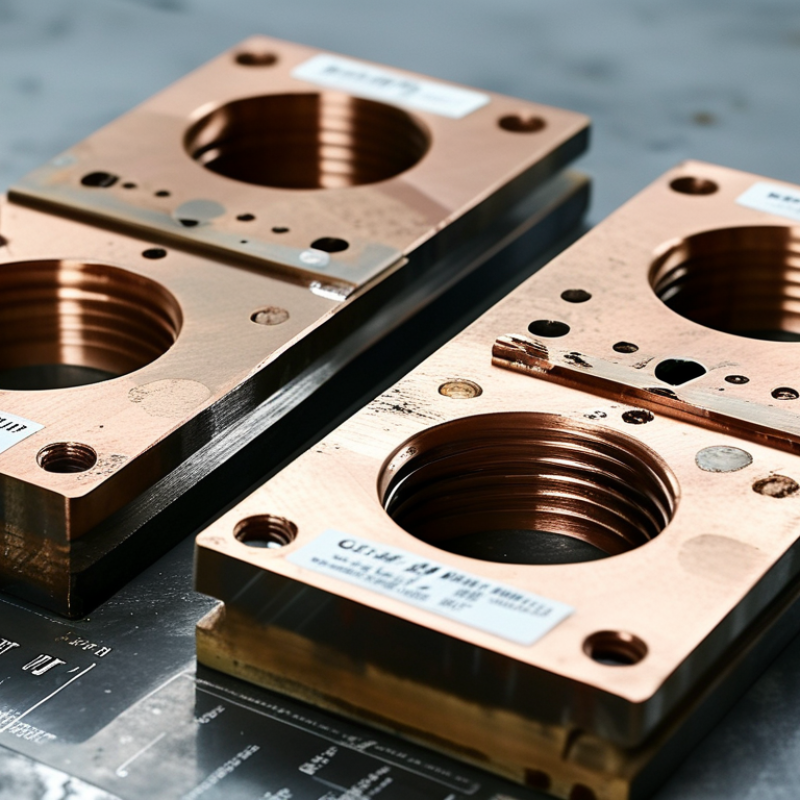
How to Choose C17200 Beryllium Copper Sheet?
Define the Required Properties of C17200 Beryllium Copper Sheet
Start with the working conditions, not the alloy name. C17200 sheet can deliver high strength, electrical conductivity, and spring performance, but these properties change with temper. Industry data from the Copper Development Association lists conductivity near 22% IACS for hardened material. ASTM B194/B194M also distinguishes requirements by product form and heat treatment. That difference matters.
Specify tensile strength, yield strength, hardness, conductivity, and thickness tolerance. A typical age-hardened C17200 sheet may reach tensile strength above 1,200 MPa and hardness around 38–44 HRC. Softer conditions offer better forming performance, but strength can fall sharply. Ask for the exact temper, not simply “C17200.” It is a common mistake.
Think about the finished part. A stamped electrical contact may need stable spring force and low resistance. A precision diaphragm may need fatigue resistance and controlled flatness. Check elongation before selecting a high-hardness grade. It may crack during tight bending. In practical purchasing, request a mill test certificate, conductivity measurement, hardness method, and heat-treatment record. Test the actual lot when tolerances are narrow. Published values are useful, but they are not guarantees for every sheet. Surface cleanliness also deserves attention, especially when the sheet enters plating or fine-contact assemblies. Too often, this detail is checked late.
| Selection Dimension | Typical C17200 Data | Recommended Requirement to Define | Selection Guidance |
|---|---|---|---|
| Material designation | UNS C17200; precipitation-hardening copper-beryllium alloy | Specify UNS C17200 and the applicable sheet or plate standard | Use the chemical composition and temper requirements together; the alloy designation alone does not define final mechanical properties. |
| Chemical composition | Beryllium: approximately 1.80–2.00%; balance copper, with controlled minor elements | Require a material certificate showing compliance with the selected specification | Confirm composition when conductivity, strength, safety, or traceability is critical. |
| Density and weight | Approximately 8.25–8.30 g/cm³ at room temperature | Calculate part weight using the specified sheet thickness and dimensions | C17200 is lighter than many steels but heavier than aluminum alloys; consider weight when designing moving or spring-loaded components. |
| Temper and heat treatment | Solution-treated material is ductile; precipitation-aged material provides substantially higher strength and hardness | Define the required temper, such as solution-treated, cold-worked, or precipitation-hardened condition | Choose a softer condition for forming before aging, or an aged condition when strength, spring force, and wear resistance are priorities. |
| Tensile strength | Approximately 585–795 MPa in solution-treated condition; commonly about 1,100–1,400 MPa after precipitation hardening, depending on temper and thickness | Set a minimum tensile strength based on the actual component load | Use the certified temper data rather than a generic alloy value, because aging treatment and cold work strongly affect strength. |
| Yield strength | Approximately 240–550 MPa in solution-treated condition; commonly about 930–1,240 MPa after precipitation hardening | Define the minimum 0.2% yield strength for load-bearing or spring applications | Yield strength is usually more important than tensile strength for contacts, diaphragms, clips, and springs that must resist permanent deformation. |
| Hardness | Roughly 80–100 HRB when solution treated; approximately 36–44 HRC in many age-hardened conditions | Specify a hardness range only when it directly supports performance or inspection | Higher hardness improves wear and deformation resistance but generally reduces formability and machinability. |
| Electrical conductivity | Approximately 20–30% IACS in solution-treated material; commonly about 22–60% IACS after aging, depending on temper | Set a minimum conductivity requirement in % IACS at the operating temperature | C17200 offers a useful balance of conductivity and strength, but it is less conductive than commercially pure copper. |
| Thermal conductivity | Typically about 105–190 W/m·K, depending on temper and test condition | Define the required heat-transfer rate or maximum allowable temperature | Select C17200 when moderate thermal conduction is needed together with high mechanical strength and fatigue resistance. |
| Formability | Good in solution-treated condition; limited after full precipitation hardening | Define bend radius, forming direction, and whether forming occurs before or after aging | For tight bends or deep forming, use annealed or solution-treated sheet and perform final aging after forming when the design permits. |
| Fatigue and spring performance | High elastic limit and good fatigue resistance after appropriate cold work and precipitation hardening | Specify cyclic load, stress range, deflection, service temperature, and required fatigue life | C17200 is well suited to electrical contacts, springs, diaphragms, clips, and precision components requiring stable spring force. |
| Corrosion resistance | Generally good resistance in atmospheric, marine, and industrial environments | Identify chemicals, humidity, salt exposure, temperature, and electrical-contact conditions | Review compatibility for ammonia, strong oxidizing environments, elevated-temperature exposure, and galvanic contact with dissimilar metals. |
| Dimensional requirements | Available sheet thickness, width, length, flatness, and thickness tolerance depend on the applicable standard and order condition | Specify thickness, width, length, flatness, edge condition, surface finish, and allowable tolerance | Do not select by nominal thickness alone; tolerance and flatness can affect stamping, electrical contact pressure, and assembly fit. |
| Surface condition | Mill finish or other specified surface condition, with cleanliness and oxide requirements determined by the application | Define surface roughness, stains, scratches, oxide limits, and any plating or coating preparation | For electrical contacts or subsequent plating, require a clean, uniform surface and control handling contamination. |
| Joining and fabrication | Can be stamped, machined, brazed, welded, and plated with process-specific controls | Define cutting, bending, welding, brazing, machining, and plating processes before selecting temper | High-strength aged sheet may require more forming force and larger bend radii; validate the complete process sequence. |
| Quality documentation | Typical documentation includes chemistry, temper, mechanical properties, dimensions, and inspection results | Require a certificate of conformity and test report appropriate to the application | For safety-critical or high-volume parts, define lot traceability, sampling frequency, test methods, and acceptance criteria. |
Note: The numerical values are typical engineering ranges and may vary with sheet thickness, processing route, temper, aging treatment, test method, and applicable specification. Always confirm the required values against the material certificate and the governing standard.
: Define tensile strength, yield strength, hardness, conductivity, thickness, width, and tolerance. Do not specify only the alloy designation.
Temper changes strength, conductivity, hardness, and forming performance. Age-hardened sheet may exceed 1,200 MPa tensile strength. Typical hardness may reach 38–44 HRC. Values vary.
Choose a softer condition when the part requires sharp bends or stamping. High-hardness sheet can crack during forming. Check elongation and the minimum bend radius first.
Request a mill test certificate, chemical analysis, hardness result, conductivity measurement, and heat-treatment record. The documents should match the same heat number.
No. Verify labels, packing lists, signatures, and laboratory details independently. Inspect edges, dents, stains, waviness, and thickness variation. Paper is not proof.
Measure thickness at several locations, including corners and edges. One attractive sample can hide a wider tolerance problem. Keep inspection photographs and retained samples.
Yes. Electrical contacts need low resistance and stable performance. Hardened material may provide high strength, but conductivity is lower than pure copper. Compare both properties.
Compare temper, thickness, tolerances, testing, cutting, packaging, and delivery time. A low price may exclude important services. Confirm stock with a lot number and shipment date.
Check cleanliness, stains, scratches, and protective packaging before plating or assembly. Late inspection can cause expensive rework. I would not approve the sheet blindly.
Choosing the right C17200 Beryllium Copper Sheet requires a clear understanding of the material’s intended application and performance demands. Start by defining the necessary properties, such as strength, hardness, electrical conductivity, thermal conductivity, corrosion resistance, and fatigue performance. Then select a suitable temper and heat treatment condition, since these factors strongly influence the balance between formability, mechanical strength, and conductivity. Softer conditions may support easier fabrication, while precipitation-hardened conditions are better suited to applications requiring high strength and wear resistance.
Next, confirm the required sheet dimensions, thickness tolerances, flatness, edge quality, and surface finish to ensure reliable processing and assembly. Standards, inspection reports, material certifications, and supplier quality controls should also be verified before purchase. Finally, compare total cost, lead time, availability, and expected service performance rather than focusing only on the initial price. A well-selected C17200 Beryllium Copper Sheet should meet technical requirements consistently while providing practical value throughout its operating life.

 Kepai
Kepai