Engineered with micro-alloying precision to deliver exceptional electrical conductivity, mechanical yield, and wear resistance.
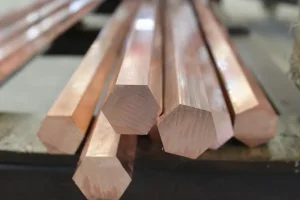
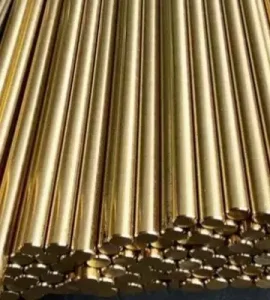
Modern manufacturing demands materials that break standard thermal and mechanical thresholds. The "Bronze Copper+" ecosystem represents our proprietary approach to high-performance alloy design—enriching traditional copper and bronze systems with critical trace elements like tellurium, beryllium, nickel, sulfur, and chromium-zirconium. These additions structurally optimize the grain architecture of the copper matrix.
By controlling structural orientation during casting and drawing, we deliver alloys that boast high electrical conductivity (up to 98% IACS) alongside robust yield strength. Whether sourcing components for high-voltage EV battery relays, high-frequency 5G RF connections, or high-durability plasma torch nozzles, standard grade metals fail to meet modern demands. Our alloys are specifically engineered to mitigate stress relaxation and combat thermal breakdown.
Compare the mechanical and electrical properties of our high-performance alloys to select the optimal grade for your application.
| Alloy Grade | Common Designation | Conductivity (% IACS) | Tensile Strength (MPa) | Machinability Rating | Key Industrial Application |
|---|---|---|---|---|---|
| Beryllium Copper | UNS C17300 / C17200 | 22 - 28 | 850 - 1050 | 50% (Excellent for BeCu) | EV Signal Connectors, Micro-springs, Coaxial Contacts |
| Nickel Beryllium Copper | UNS C17510 / CuNi2Be | 45 - 60 | 680 - 800 | 40% | Resistance Welding Electrodes, High-current Relays |
| Tellurium Copper | UNS C14500 / TeCu | 90 - 98 | 250 - 360 | 85% (Free-cutting) | Laser/Plasma Cutting Tips, New Energy EV Connectors |
| Sulfur Copper | UNS C14700 / S-Cu | 90 - 96 | 240 - 340 | 85% (Clean Chips) | Precision Electrical Terminals, Automated Screw Machining |
| Oxygen-Free Copper | UNS C10200 / OF-Cu | 100 - 101 | 220 - 300 | 20% | Semiconductor Substrates, Ultra-high Vacuum Systems |
| Lead Brass | UNS C36000 / CuZn39Pb3 | 26 | 340 - 450 | 100% (Reference) | Complex High-Volume Stamped Fasteners, Lock Bodies |
A closed-loop quality assurance system controlling production from casting to chemical composition validation.
Utilizes medium-frequency induction furnaces to control alloy composition. This step eliminates impurities and keeps gas levels low, preventing defect-causing voids during casting.
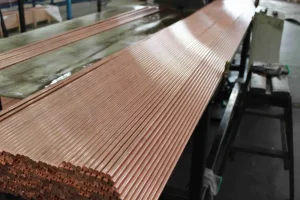
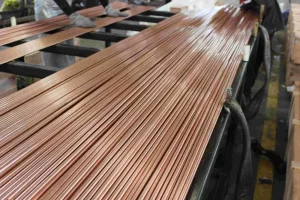
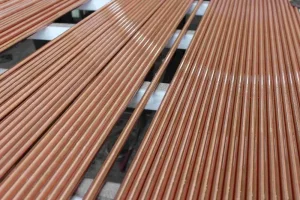
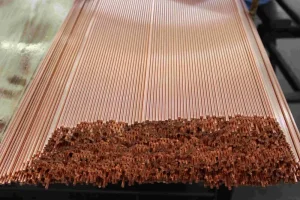
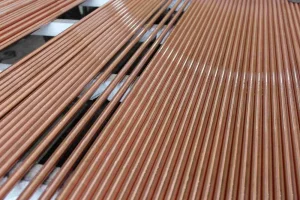
High-tonnage hydraulic extrusion presses shape billets into rods, tubes, or custom profiles. Multi-stage cold drawing is then used to refine the microstructural grain size and meet strict dimensional tolerances.
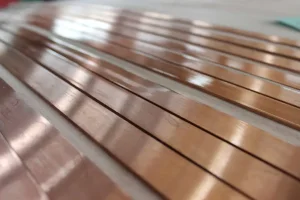
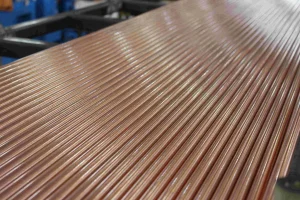
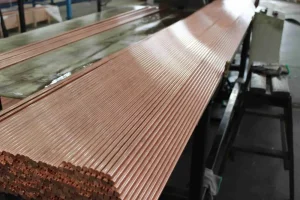
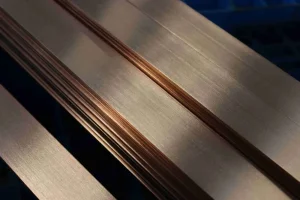
Multi-roll straightening machinery aligns bars to standard tolerances. Material is then coated in protective anti-tarnish solutions and wrapped to prevent damage during shipping.
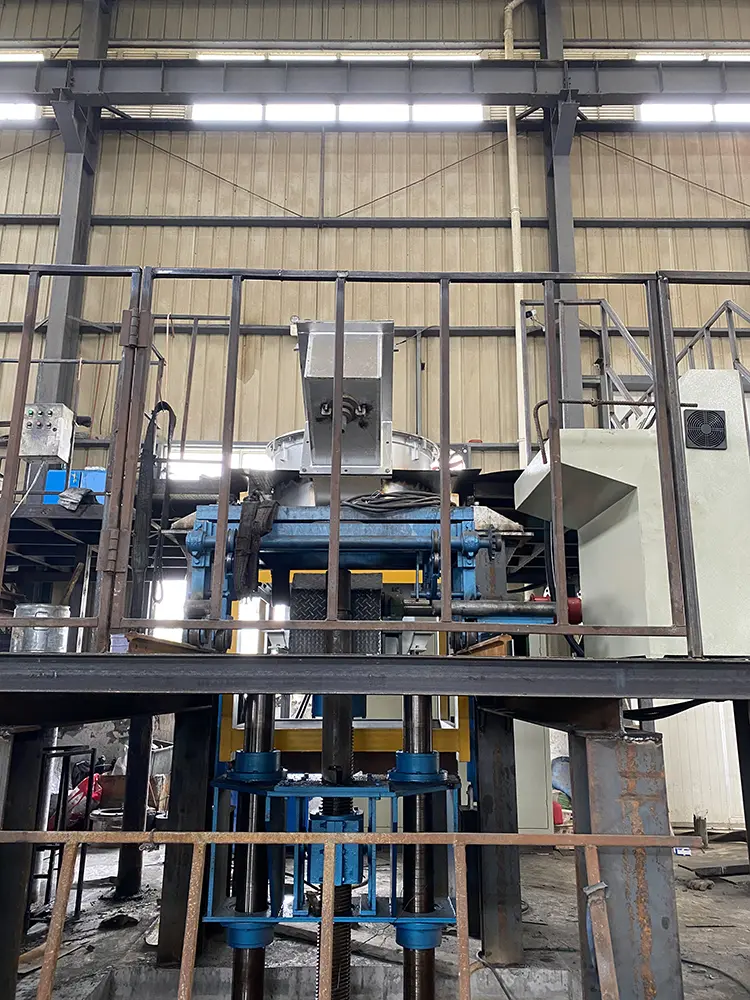
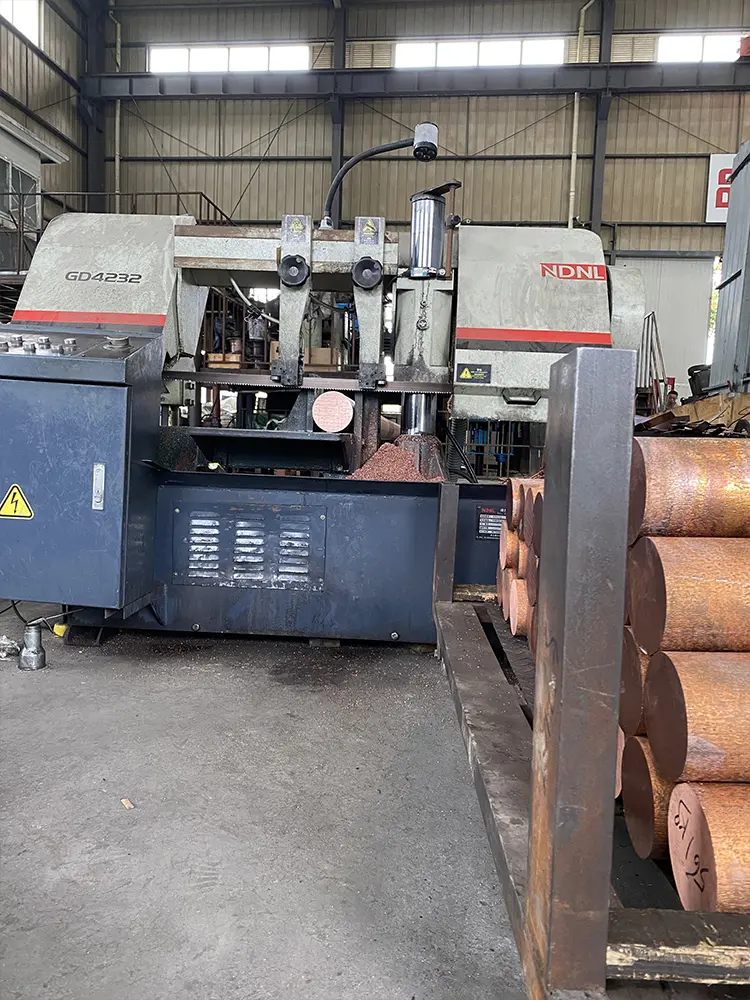
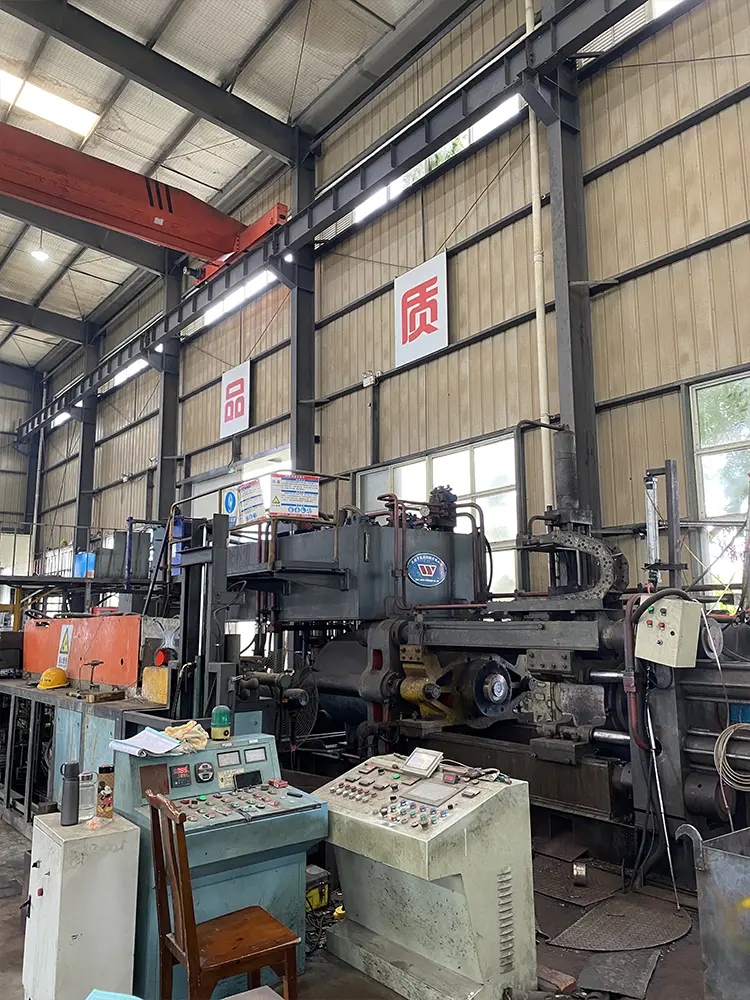
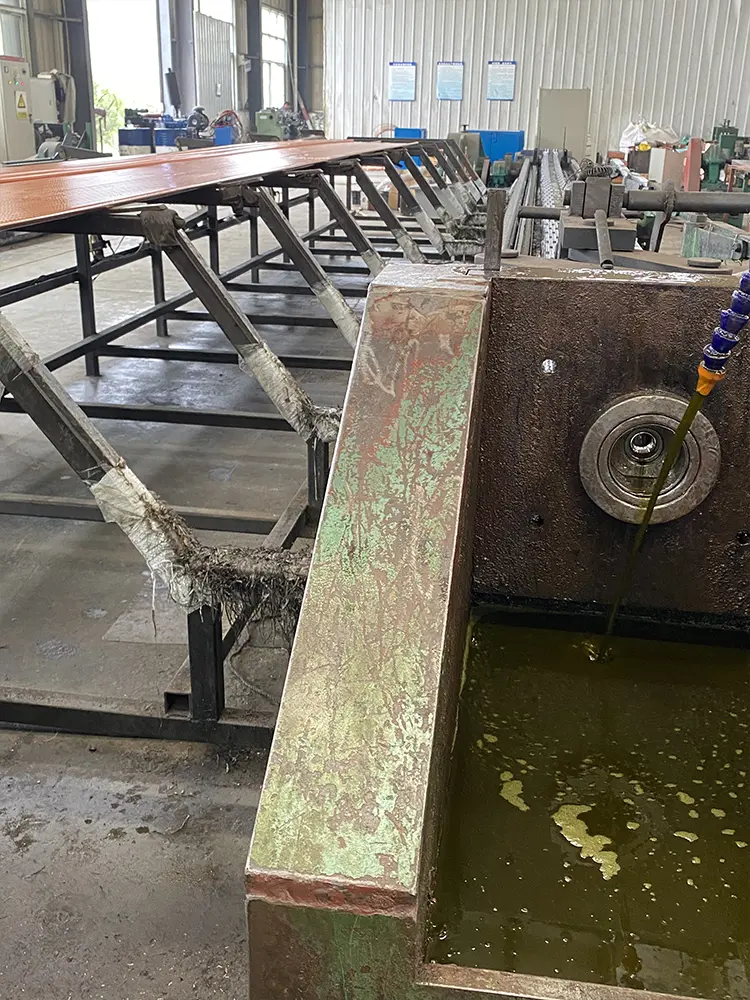
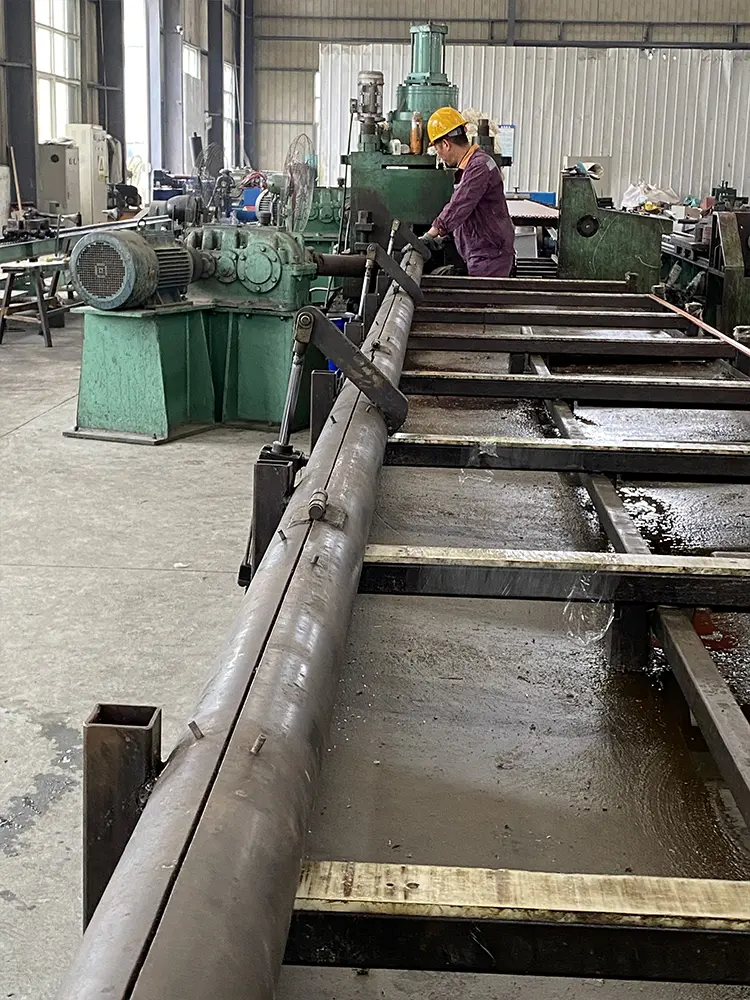
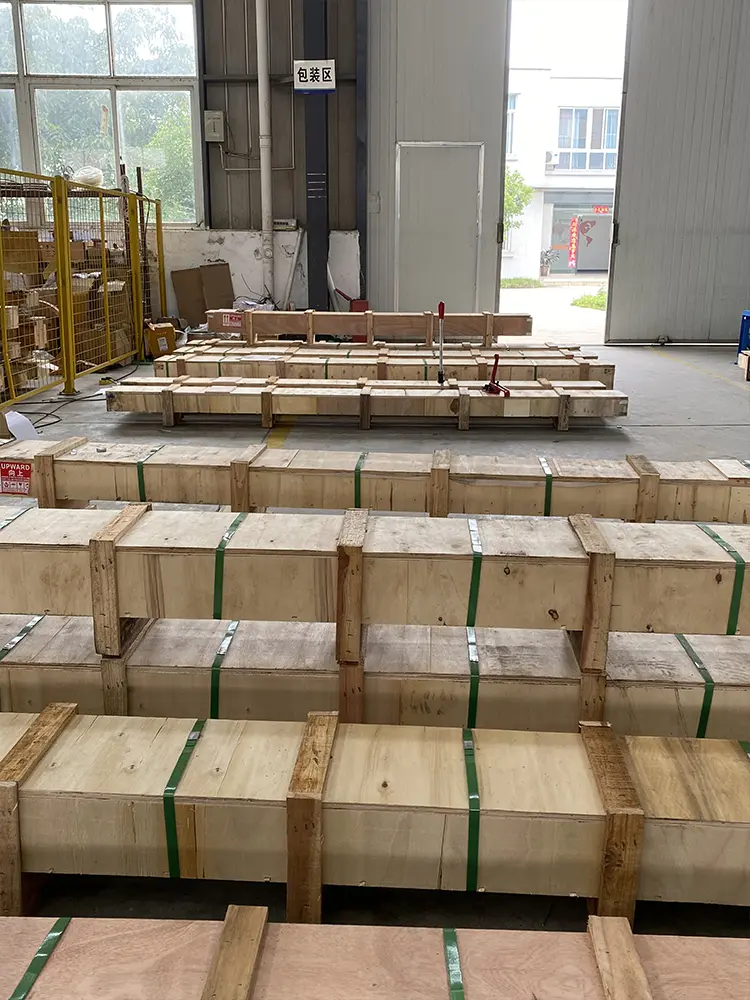
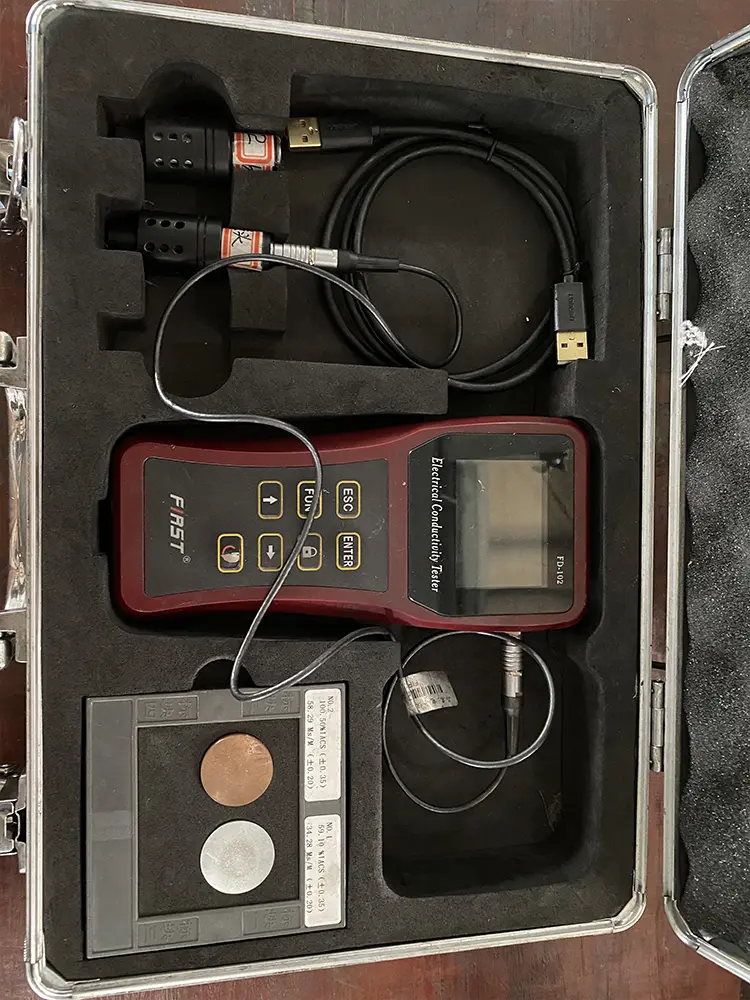
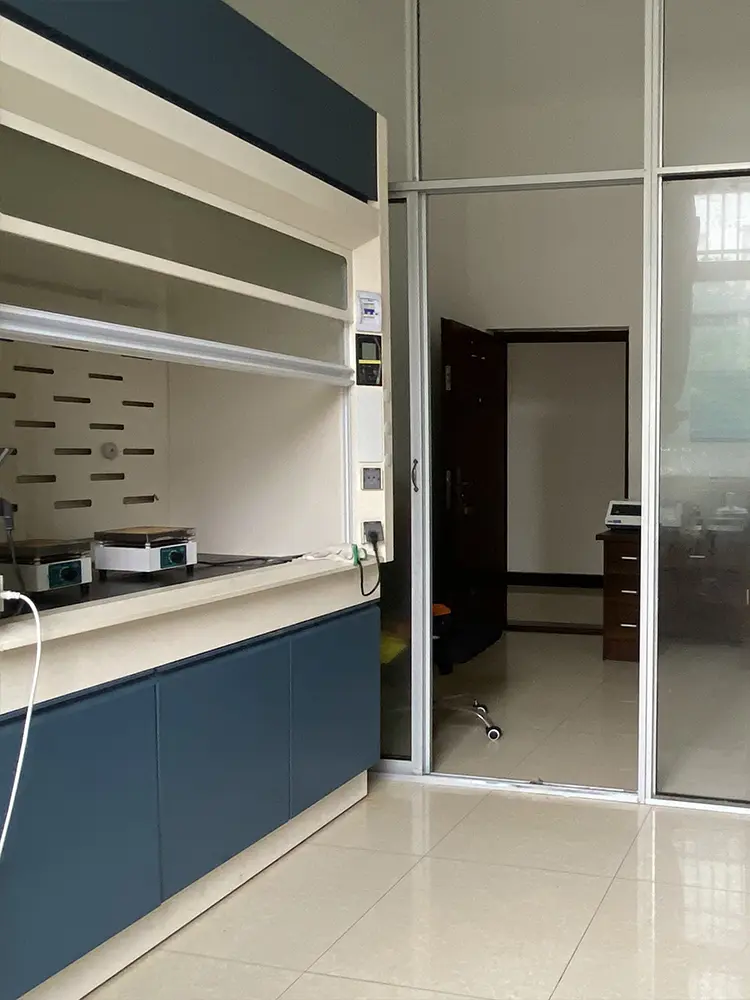

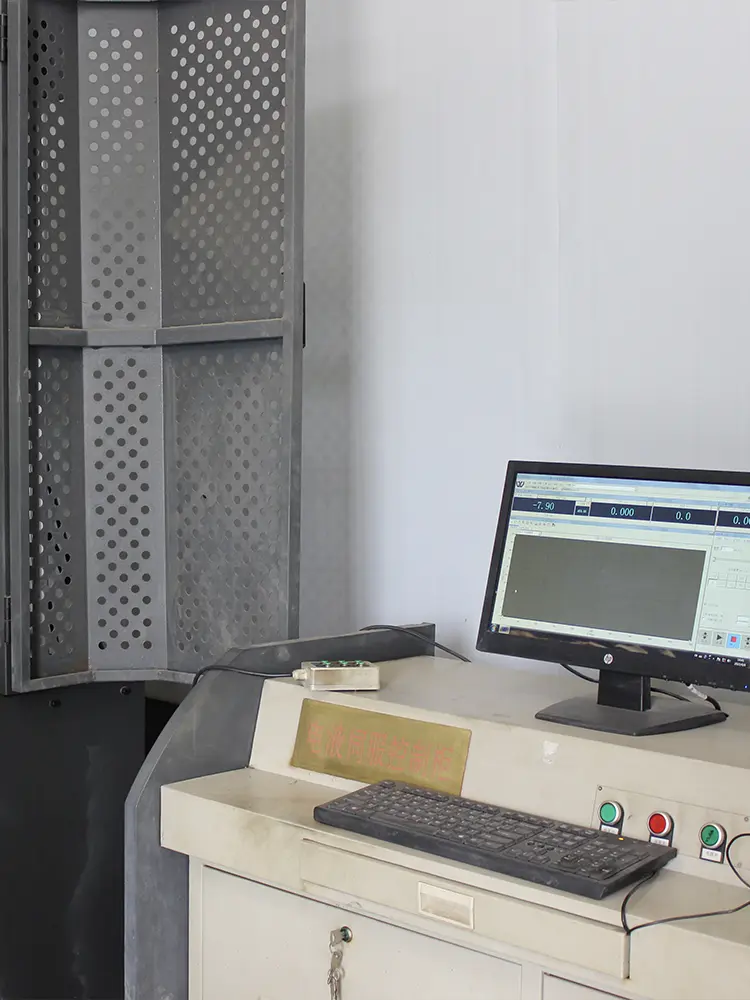
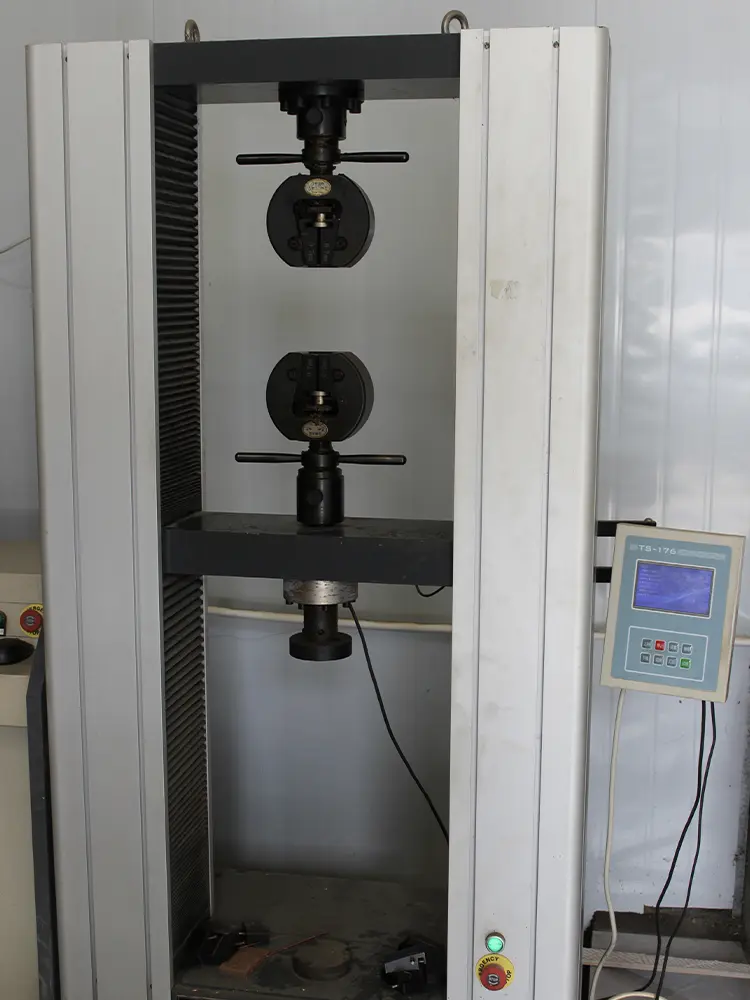
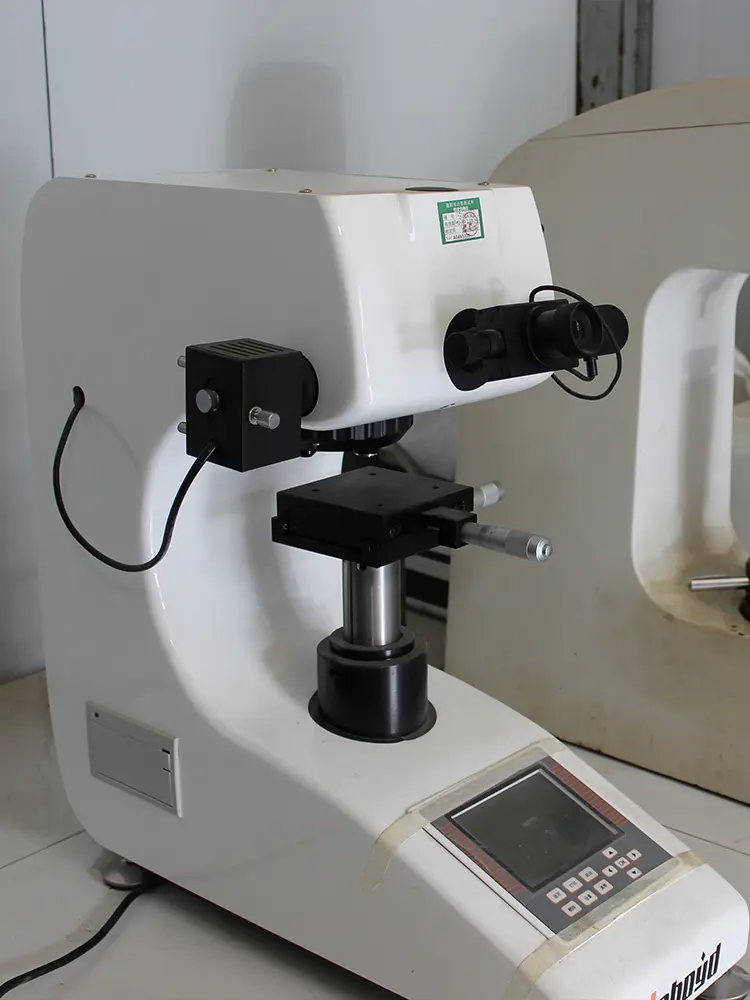
We run a vertically integrated manufacturing line in Guanghan Industrial Development Zone, Sichuan. By maintaining control over the entire cycle from raw copper charging to extrusion and final machining, we minimize variation between batches. This integration provides protection against raw material price shocks and shipping delays.
By standardizing processes to international standards, we supply parts that are ready for immediate factory integration. Standard testing protocols, including eddy current conductivity checking and universal tensile evaluation, verify that every bar and component meets the requested technical requirements before dispatch.
Operating from our 9,000 square meter facility in Sichuan, we leverage local industrial clusters and energy access to keep production reliable and cost-competitive. Our close proximity to national transport networks (adjacent to National Highway 108) helps streamline regional and international logistics.
Rather than operating as a simple casting shop, Sichuan Kepai is a registered high-tech enterprise. We focus on strategic new materials to support industrial modernization. By combining domestic raw material access with advanced metallurgy, we offer global procurement teams a dependable sourcing alternative that balances quality, volume, and lead time.
A look at our ongoing research and development initiatives focused on high-conductivity, high-strength micro-alloys.
Improving heat-treatment cycles for C17510 and Chromium Zirconium Copper to achieve higher strength without sacrificing conductivity.
Formulating alternative eco-friendly tellurium-sulfur-copper grades to meet stricter global environmental laws while maintaining high machinability.
Implementing severe plastic deformation (SPD) techniques to produce ultra-fine grain alloys for micro-miniature 5G/6G RF terminals.
Integrating real-time sensor monitoring on extrusion and drawing lines to track dimensional deviations and improve quality consistency.
Our materials are verified by third-party testing to comply with ASTM, EN, DIN, and JIS metallurgical specifications.
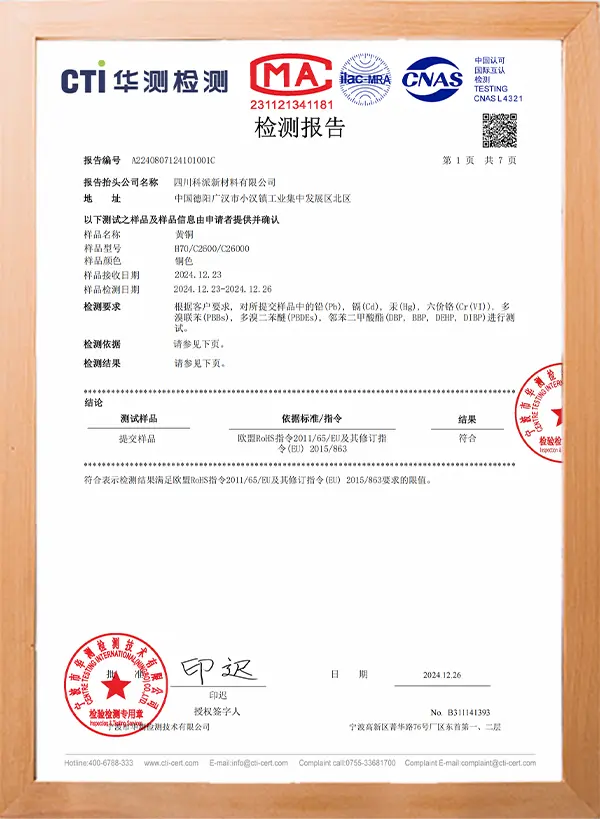
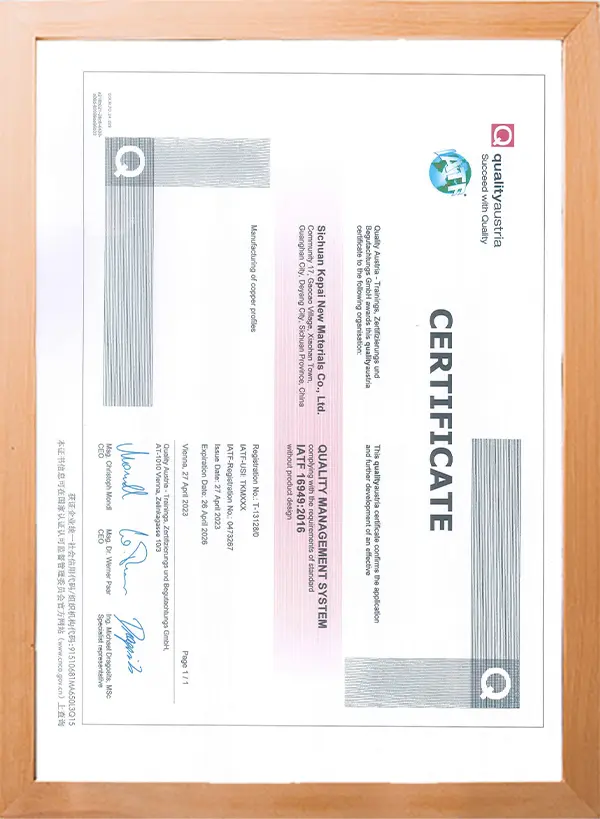
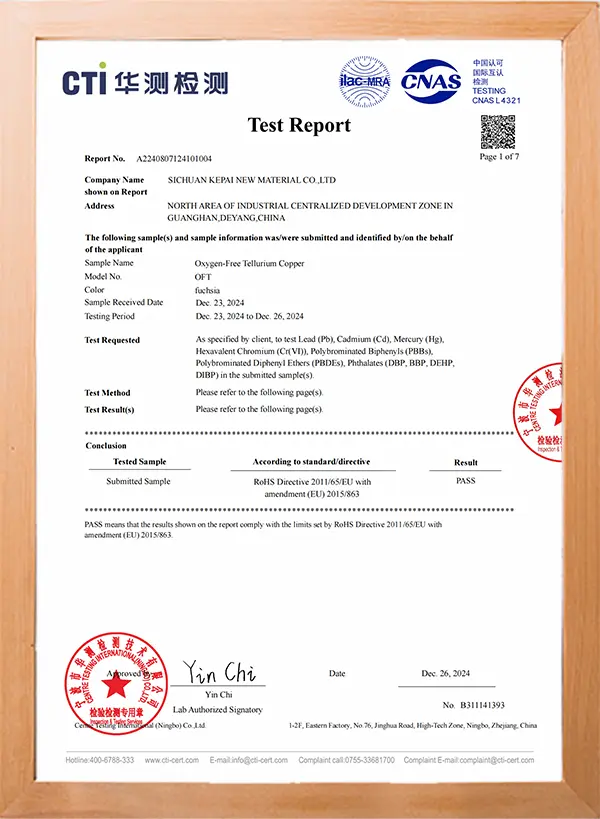
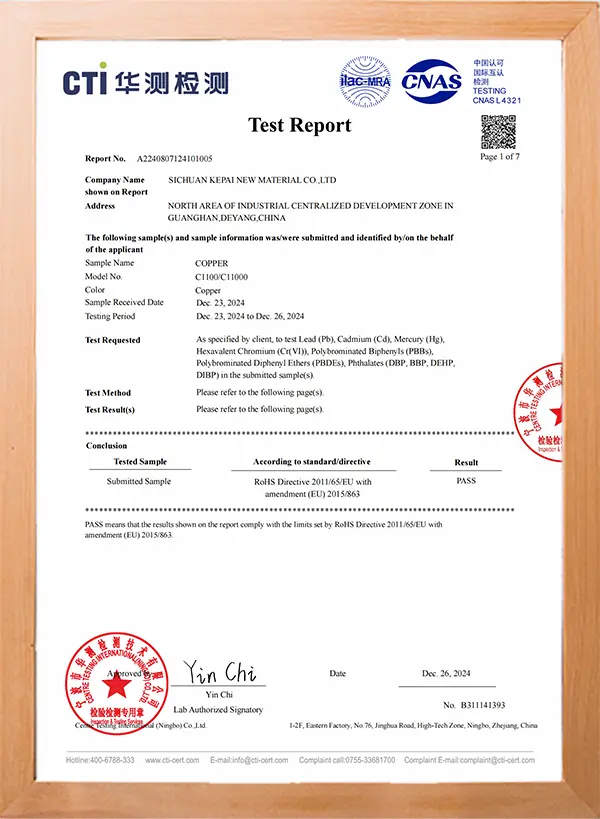
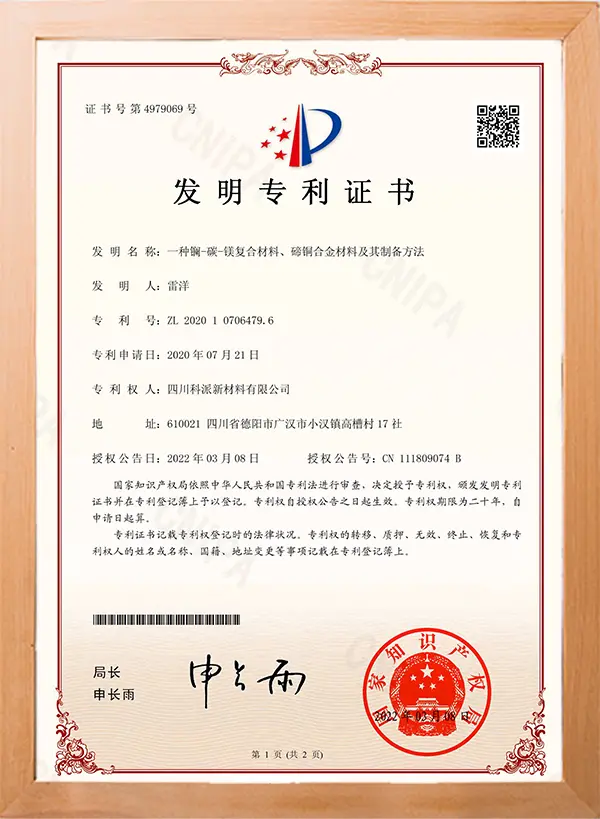
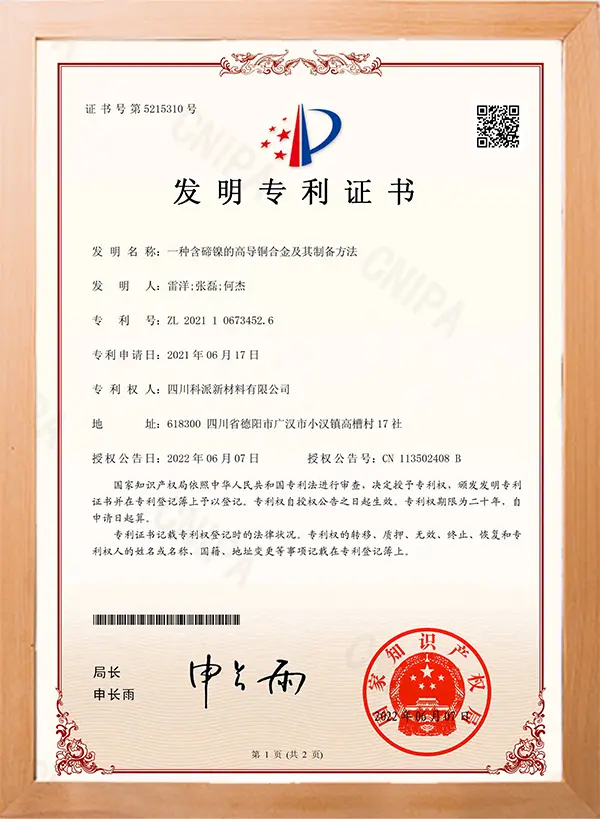
Our products are regularly cross-referenced against global standards. We provide material test reports (MTR) detailing chemical analysis, tensile strength, hardness, and electrical conductivity to verify compliance with ASTM B301 (for Tellurium Copper), ASTM B196/B197 (for Beryllium Copper), and EN 12164 free-machining standards. This documentation simplifies customs compliance and internal quality inspections for our overseas partners.
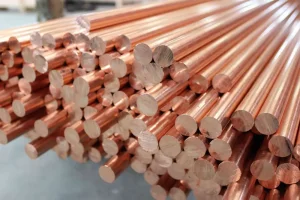
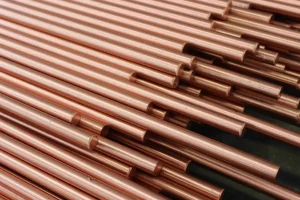
Explore our selection of specialized, free-machining, and high-conductivity copper and brass materials.
Expert answers to common engineering and sourcing questions about custom bronze and high-performance copper alloys.
While C11000 pure copper offers high conductivity (100% IACS), it is soft and produces long, stringy chips that can wrap around tooling during high-speed machining. Tellurium Copper (C14500) contains roughly 0.5% tellurium, which creates fine, brittle chips. This improves the machinability rating to 85%. Additionally, it preserves 93% to 98% IACS conductivity, making it a suitable choice for high-volume CNC machined components, electrical switches, and plasma cutting torch components.
Beryllium copper alloys (such as C17300 and C17510) rely on precipitation age hardening. During heat treatment, tiny cobalt- or nickel-beryllide precipitates form within the copper matrix. These particles restrict dislocation movement, increasing the alloy's tensile strength up to 1050 MPa. Because the alloying elements precipitate out of solid solution, the copper matrix remains relatively pure, preserving conductivity between 22% and 60% IACS.
We use a multi-step inspection framework that includes direct-reading emission spectrometry to check chemistry, eddy current testing for electrical conductivity, Vickers & Rockwell testers for hardness, and universal hydraulic testers for yield and elongation values. We also conduct metallographic polishing and analysis to verify uniform grain structure and prevent micro-segregation.
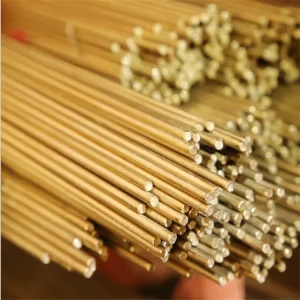
We supply custom extruded profiles, hexagonal bars, hollow tubes, plates, and wire. Our engineers work with clients to design tooling and dies that match custom specifications, reducing downstream machining costs and raw material waste.
Copper alloys oxidize easily when exposed to humid, salty marine air. We treat finished bars with a thin anti-tarnish coating. We then pack them in heavy-duty moisture-barrier films and wood crates to ensure materials arrive clean and oxide-free.
Partner with Sichuan Kepai New Materials Co., Ltd. for reliable specialty copper alloys. Let's work together to develop high-performance materials for your industrial projects.
 Kepai
Kepai