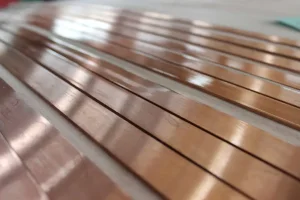
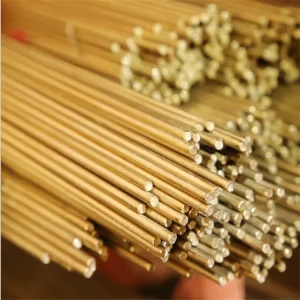
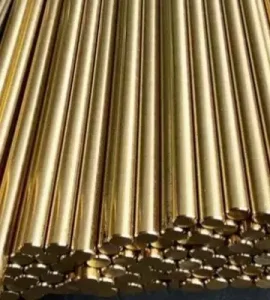
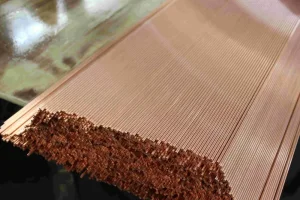
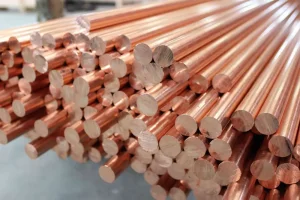
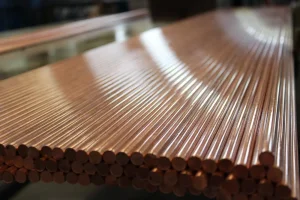
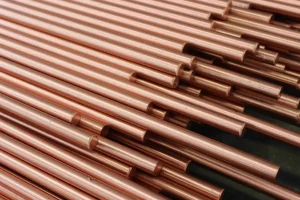
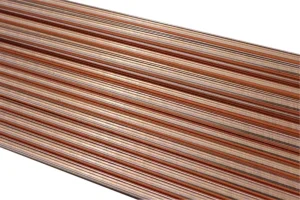
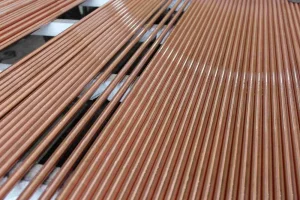
In the era of rapid technological advancement, high-conductivity materials serve as the circulatory system for modern electronics, renewable energy, and automotive industries. Oxygen-free copper (OFC) wire represents the pinnacle of this segment. Unlike standard electrolytic tough pitch (ETP) copper, OFC is manufactured under controlled, oxygen-free conditions, typically achieving 99.99% purity. This critical distinction eliminates the brittle cuprous oxide inclusions, resulting in superior electrical conductivity, ductility, and corrosion resistance.
Industry Trend: As the global transition to Electric Vehicles (EVs) and high-frequency 5G networks accelerates, the demand for high-purity copper alloys is non-linear. The industry is moving beyond commodity copper, shifting toward customized, high-performance alloys—a niche where Sichuan Kepai New Materials leads with its proprietary manufacturing processes.
Sichuan Kepai New Materials Co., Ltd. (est. 2017) has established itself as a cornerstone in the high-tech material supply chain. Our approach integrates raw material R&D with advanced forming techniques.
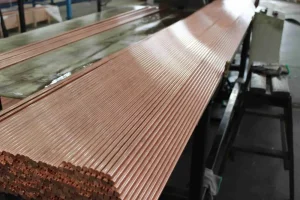
Modernized Production Facility
Year of Innovation
Sector-Specific R&D focus
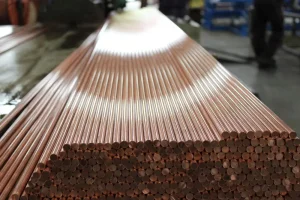
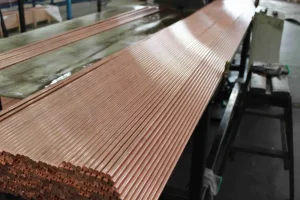
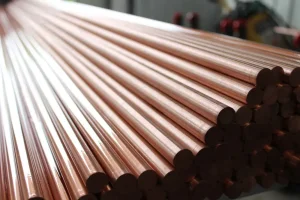
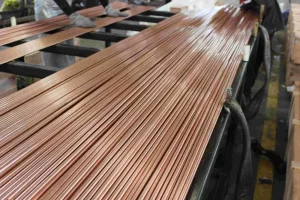
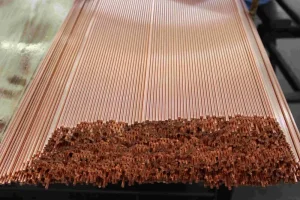
Our manufacturing workflow—encompassing smelting, extrusion, drawing, and precision straightening—ensures that every spool of copper wire meets international metallurgical standards. By optimizing the crystalline structure of our copper alloys, we provide materials that reduce signal loss in sensitive equipment and enhance the thermal management capabilities of power electronics.
The versatility of our Oxygen-Free Copper Wire is evident across several critical sectors:
Q1: Why choose Oxygen-Free Copper over regular copper?
OFC has lower levels of impurity (specifically oxygen), which significantly increases conductivity (IACS%) and makes the material less susceptible to hydrogen embrittlement during welding or annealing processes.
Q2: What is the primary difference in Kepai’s manufacturing process?
We utilize advanced smelting and continuous extrusion processes that precisely control the cooling rate, resulting in a refined grain structure that offers better mechanical strength and improved formability for complex parts.
Q3: How does Kepai ensure quality control?
Our facility is equipped with state-of-the-art testing instruments, including eddy current conductance meters, metallographic polishers, and universal testing machines, to verify conductivity and structural integrity of every batch.
Q4: Do you offer custom alloy formulations?
Yes, we specialize in high-conductivity, easy-to-machine alloys (including Tellurium Copper and Silver Copper), tailoring chemical composition to the specific voltage, strength, and durability requirements of your project.
 Kepai
Kepai